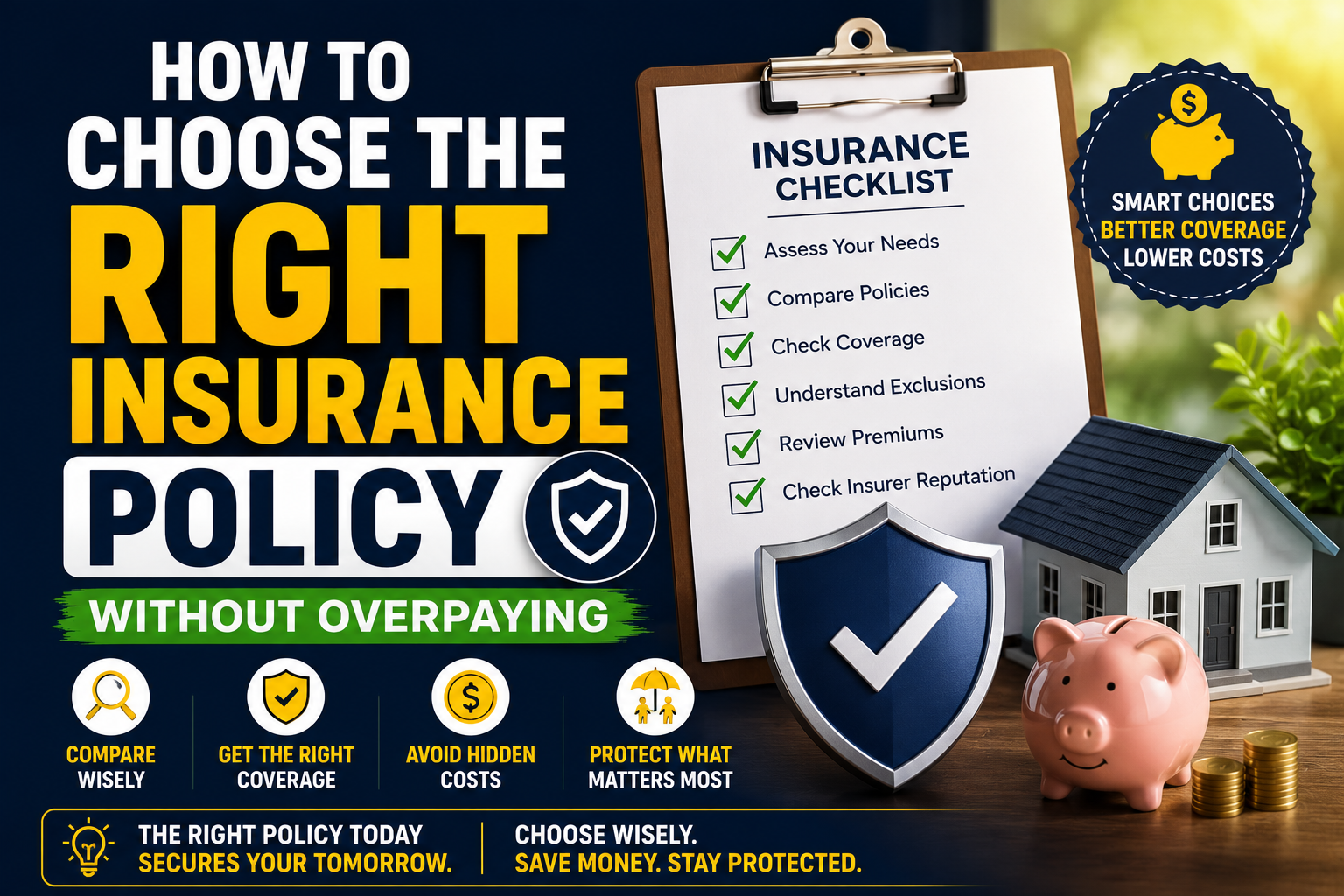
Insurance is one of the most important financial tools you can invest in, but buying the wrong policy—or paying more than necessary—can be an expensive mistake. Many people assume that the most expensive policy offers the best protection, while others choose the cheapest option without understanding what they’re sacrificing. Both approaches can leave you financially vulnerable.
The good news is that you don’t have to spend a fortune to get excellent insurance coverage. By understanding how insurance works, comparing policies carefully, and knowing what to look for, you can protect yourself, your family, and your assets without stretching your budget.
In this guide, we’ll walk you through practical strategies for choosing the right insurance policy while avoiding unnecessary expenses.
Why Choosing the Right Insurance Matters
Insurance isn’t just another monthly bill—it’s your financial safety net. Whether it’s a medical emergency, a car accident, property damage, or an unexpected loss, the right insurance policy can prevent a financial setback from becoming a financial disaster.
However, purchasing insurance blindly can result in:
- Paying for coverage you don’t need
- Being underinsured when you need protection most
- High deductibles you can’t afford
- Claim denials because of policy exclusions
- Wasting money on unnecessary add-ons
Choosing wisely helps you strike the perfect balance between affordability and protection.
1. Understand What You Actually Need
The first step is identifying the risks you need to protect against.
Ask yourself:
- What assets do I own?
- What financial responsibilities do I have?
- Who depends on my income?
- What risks am I most likely to face?
For example:
- A homeowner should prioritize home insurance.
- Parents should consider life insurance.
- Vehicle owners need auto insurance.
- Business owners should protect their operations with business insurance.
- Frequent travelers may benefit from travel insurance.
Buying insurance you don’t need wastes money.
Buying too little can cost far more.
2. Know the Different Types of Insurance
Understanding your options prevents unnecessary purchases.
Common insurance types include:
Health Insurance
Helps cover medical expenses including hospitalization, surgeries, medications, and doctor visits.
Life Insurance
Provides financial support to your beneficiaries if you pass away.
Auto Insurance
Protects against vehicle damage, theft, and liability after accidents.
Home Insurance
Covers your home and belongings against risks such as fire, storms, theft, and vandalism.
Business Insurance
Protects businesses from property damage, lawsuits, cyberattacks, employee injuries, and other operational risks.
Knowing which insurance applies to your situation keeps you from paying for policies you don’t need.
3. Compare More Than Just the Premium
One of the biggest mistakes buyers make is comparing only the monthly premium.
A lower premium doesn’t always mean lower costs.
Consider these factors:
- Coverage limits
- Deductibles
- Exclusions
- Claim process
- Customer satisfaction
- Financial stability of the insurer
- Optional benefits
Sometimes paying an extra $10 per month provides thousands of dollars in additional protection.
Focus on value—not just price.
4. Understand Deductibles
A deductible is the amount you pay before your insurance begins covering a claim.
Example:
If your deductible is $500 and your repair bill is $4,000, you’ll pay the first $500 while your insurer covers the remaining eligible amount.
Policies with higher deductibles usually have lower monthly premiums.
However, don’t choose a deductible you couldn’t comfortably afford during an emergency.
Find a balance between monthly savings and financial readiness.
5. Avoid Paying for Coverage You Don’t Need
Insurance companies often offer optional add-ons.
While some are useful, others may duplicate protection you already have.
Examples include:
- Rental car coverage
- Extended roadside assistance
- Gadget protection
- Personal accident riders
- Identity theft protection
Before accepting any add-on, ask:
- Do I already have this protection elsewhere?
- Is this risk likely?
- Is the additional cost justified?
Only pay for benefits that genuinely improve your financial security.
6. Read the Fine Print
Many insurance disputes occur because policyholders never read their contracts.
Pay attention to:
- Exclusions
- Waiting periods
- Maximum claim limits
- Renewal conditions
- Cancellation terms
- Claim deadlines
Understanding these details prevents unpleasant surprises when filing a claim.
If anything is confusing, ask your insurer to explain it before signing.
7. Check the Insurance Company’s Reputation
Price matters—but reliability matters even more.
Research insurers by looking at:
- Customer reviews
- Claim settlement rates
- Complaint history
- Financial strength
- Years in business
- Customer support availability
A company with a strong reputation is more likely to process claims fairly and efficiently.
8. Bundle Your Insurance Policies
Many insurers reward customers who purchase multiple policies.
For example, you may combine:
- Home and auto insurance
- Life and health insurance
- Homeowners and umbrella insurance
Bundling often provides:
- Lower premiums
- Simplified billing
- Easier policy management
- Loyalty discounts
Always compare bundled pricing against separate policies to ensure you’re getting a genuine discount.
9. Review Your Coverage Every Year
Your insurance needs change over time.
Review your policies annually or after major life events such as:
- Marriage
- Divorce
- Birth of a child
- Buying a home
- Starting a business
- Retirement
- Significant salary changes
Updating your coverage helps you avoid paying for outdated protection or being underinsured.
10. Don’t Automatically Renew Without Comparing
Many people renew their insurance every year without checking competitors.
This can lead to paying higher premiums than necessary.
Before renewing:
- Request updated quotes
- Compare benefits
- Ask about loyalty discounts
- Negotiate with your current insurer
Insurance markets change frequently, and new discounts or better policies may be available.
11. Ask About Discounts
Insurance companies offer discounts that many customers never request.
Potential discounts include:
- Safe driver discounts
- Multi-policy discounts
- No-claim bonuses
- Security system discounts
- Smoke detector discounts
- Good student discounts
- Low-mileage discounts
- Automatic payment discounts
Always ask what discounts are available before purchasing a policy.
12. Be Honest on Your Application
Providing inaccurate information may reduce your premium initially—but it can lead to denied claims later.
Always disclose:
- Medical history
- Driving history
- Previous claims
- Property details
- Business activities
Honesty protects your coverage and ensures smoother claim processing.
13. Work With a Trusted Insurance Advisor
Insurance policies can be complex.
A knowledgeable advisor can help you:
- Identify coverage gaps
- Explain policy terms
- Compare insurers
- Recommend suitable protection
- Avoid unnecessary expenses
Choose an advisor who prioritizes your needs rather than earning the highest commission.
Common Mistakes That Lead to Overpaying
Avoid these expensive habits:
- Buying insurance based solely on advertisements
- Ignoring policy exclusions
- Choosing extremely low deductibles without considering premium costs
- Purchasing duplicate coverage
- Forgetting to update policies
- Missing available discounts
- Failing to compare quotes
- Automatically renewing without review
Small mistakes today can cost thousands in unnecessary premiums over the years.
Smart Money-Saving Tips
Here are practical ways to reduce insurance costs without sacrificing protection:
- Compare quotes from at least three insurers.
- Increase your deductible if you have emergency savings.
- Maintain a good credit profile where applicable.
- Install safety devices such as alarms or smoke detectors.
- Drive safely to qualify for no-claim bonuses.
- Bundle multiple policies.
- Pay annually if it reduces administrative fees.
- Review your policies every year.
Saving money doesn’t mean buying less insurance—it means buying smarter insurance.
Frequently Asked Questions (FAQs)
How much insurance coverage do I really need?
The amount depends on your assets, income, debts, family responsibilities, and financial goals. Choose coverage that would realistically protect you from major financial losses.
Is the cheapest insurance policy the best option?
Not necessarily. The cheapest policy may have limited benefits, lower coverage limits, or higher deductibles. Compare overall value instead of focusing only on price.
How often should I compare insurance quotes?
At least once a year or whenever your policy is due for renewal.
Can I negotiate insurance premiums?
Yes. Many insurers offer discounts or better pricing if you ask, especially if you’ve been a loyal customer or have quotes from competitors.
What should I look for before buying insurance?
Review the policy’s coverage, exclusions, deductibles, claim process, insurer reputation, customer reviews, and available discounts.