Insurance is one of the smartest financial decisions you can make, but with so many different types of coverage available, it’s easy to get confused. Two of the most commonly misunderstood types are life insurance and health insurance. While both are designed to provide financial protection, they serve very different purposes.
Many people mistakenly believe that having one type of insurance means they don’t need the other. In reality, life insurance and health insurance complement each other, covering different risks that could significantly impact your finances and your family’s well-being.
So, what exactly is the difference? Which one should you prioritize? And do you really need both?
In this comprehensive guide, we’ll break down everything you need to know about life insurance and health insurance, including how they work, what they cover, their benefits, key differences, and how to determine which one is right for you.
What Is Life Insurance?
Life insurance is a financial agreement between you and an insurance company. In exchange for regular premium payments, the insurer agrees to pay a predetermined sum of money—known as the death benefit—to your chosen beneficiaries if you pass away while the policy is active.
The primary purpose of life insurance is to provide financial security for your loved ones after your death.
The payout can be used to:
- Replace lost income
- Pay off outstanding debts
- Cover funeral expenses
- Fund children’s education
- Pay household bills
- Maintain the family’s lifestyle
- Leave an inheritance
Life insurance isn’t for you—it’s for the people who depend on you financially.
What Is Health Insurance?
Health insurance helps pay for medical expenses while you’re alive. Depending on your policy, it may cover doctor visits, surgeries, hospital stays, emergency treatment, medications, laboratory tests, specialist consultations, and preventive care.
Without health insurance, even a single hospitalization can cost thousands of dollars and place significant financial strain on individuals and families.
Health insurance exists to reduce the financial burden of unexpected medical expenses, ensuring you can receive quality healthcare without exhausting your savings.
The Main Purpose of Each Insurance Type
Understanding the core purpose of each policy makes the difference much clearer.
Life Insurance
Protects your family’s finances if you die.
Health Insurance
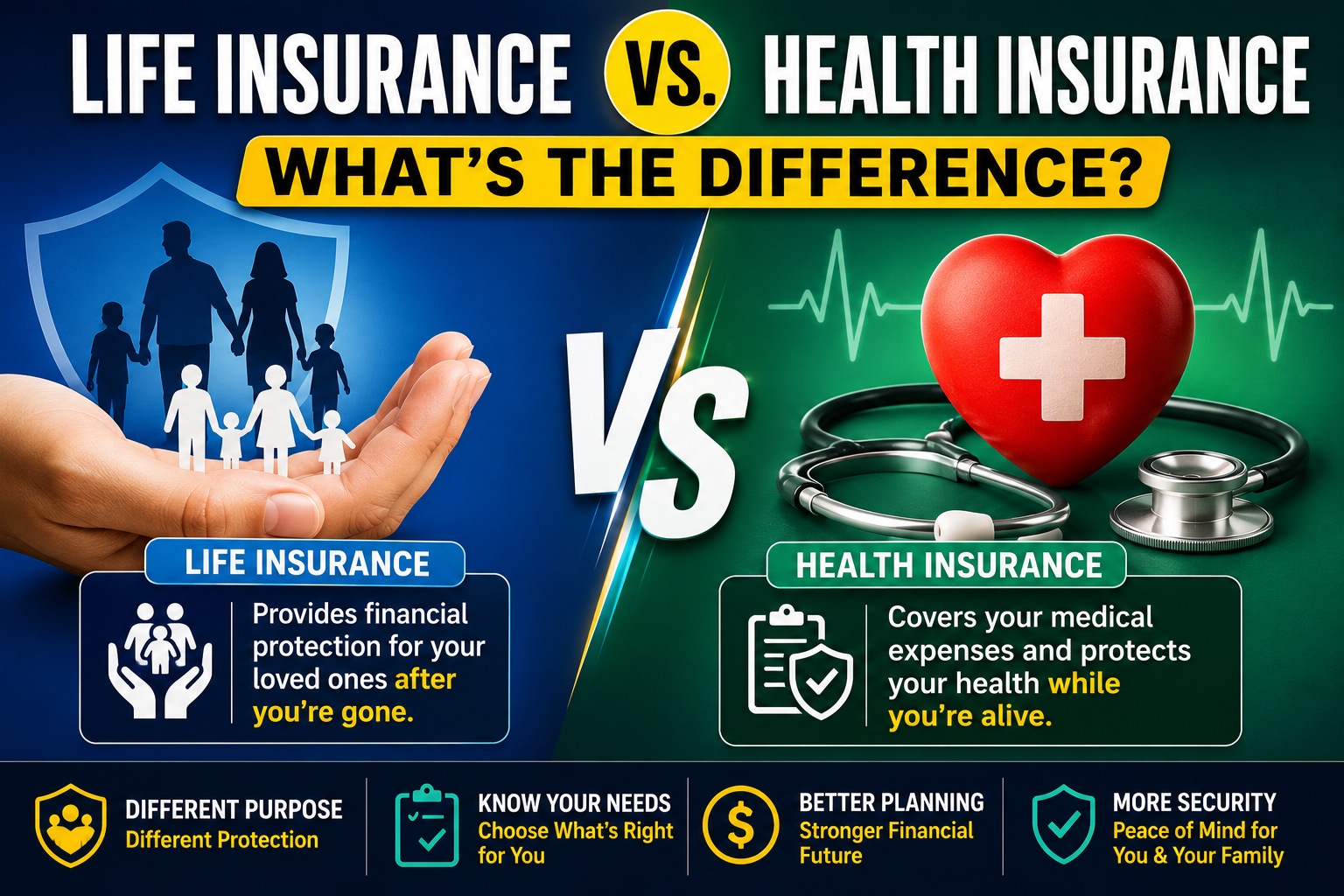
Protects your finances while you’re alive by helping cover healthcare costs.
Think of it this way:
- Life insurance protects your loved ones.
- Health insurance protects you.
What Does Life Insurance Cover?
Most life insurance policies provide a lump-sum payment to your beneficiaries after your death.
That money can be used however they choose, including:
- Mortgage payments
- Personal loans
- Credit card debt
- Funeral costs
- Daily living expenses
- Children’s education
- Business continuation
- Estate planning
Some policies also include optional riders, such as:
- Critical illness benefits
- Disability benefits
- Accidental death benefits
- Terminal illness benefits
Coverage depends on the specific policy you purchase.
What Does Health Insurance Cover?
Health insurance coverage varies by provider and plan but commonly includes:
- Hospital admissions
- Emergency care
- Surgical procedures
- Doctor consultations
- Prescription medications
- Diagnostic tests
- Laboratory services
- Preventive checkups
- Vaccinations
- Maternity care (depending on the policy)
- Mental health treatment (on some plans)
- Rehabilitation services
Some policies also provide access to telemedicine, wellness programs, and specialist referrals.
Always review the policy details to understand what is included and what exclusions apply.
Life Insurance vs. Health Insurance: Key Differences
| Feature | Life Insurance | Health Insurance |
|---|---|---|
| Purpose | Financial support after death | Pays medical expenses while alive |
| Who Benefits? | Your beneficiaries | You (the policyholder) |
| When It Pays | Upon death (or covered event) | During illness, injury, or medical treatment |
| Type of Payment | Lump-sum benefit | Reimbursement or direct payment for healthcare services |
| Main Goal | Protect your family’s financial future | Protect you from high healthcare costs |
| Covers Funeral Expenses? | Yes (through the death benefit) | No |
| Covers Hospital Bills? | No | Yes |
| Protects Dependents? | Indirectly through financial support | Primarily protects the insured individual |
Types of Life Insurance
1. Term Life Insurance
Provides coverage for a specific period, such as 10, 20, or 30 years.
Advantages:
- Lower premiums
- High coverage
- Simple structure
Ideal for young families and people with temporary financial responsibilities.
2. Whole Life Insurance
Provides lifelong coverage as long as premiums are paid.
Features:
- Lifetime protection
- Cash value accumulation
- Fixed premiums
Generally more expensive than term life insurance.
3. Universal Life Insurance
Offers flexible premiums and adjustable coverage with a savings component.
Suitable for people seeking long-term financial planning.
Types of Health Insurance
Individual Health Insurance
Designed for one person.
Family Health Insurance
Covers multiple family members under one policy.
Employer-Sponsored Health Insurance
Provided through an employer, often with shared premium costs.
Critical Illness Insurance
Pays a lump sum upon diagnosis of specified serious illnesses such as cancer, heart attack, or stroke.
Senior Health Insurance
Tailored to older adults with age-specific healthcare needs.
Who Should Buy Life Insurance?
Life insurance is especially important if you:
- Have children
- Are married
- Support aging parents
- Own a home with a mortgage
- Have outstanding debts
- Own a business
- Want to leave a financial legacy
If someone depends on your income, life insurance is worth considering.
Who Needs Health Insurance?
Everyone can benefit from health insurance because illness and accidents are often unpredictable.
Health insurance is particularly important if you:
- Have a family
- Have chronic health conditions
- Want access to quality healthcare
- Cannot afford unexpected medical bills
- Want financial protection against rising healthcare costs
Even healthy individuals may face emergencies that require expensive treatment.
Can You Have Both?
Absolutely—and for many people, having both is the ideal approach.
Life insurance and health insurance do not replace one another.
Instead, they work together to provide comprehensive financial protection.
For example:
Imagine you’re hospitalized after an accident.
Your health insurance helps pay your medical expenses.
Years later, if you pass away unexpectedly, your life insurance provides financial support to your family.
Each policy protects against a different type of financial risk.
Common Misconceptions
“I’m Young, So I Don’t Need Insurance.”
Young adults are often healthier and may qualify for lower premiums. Purchasing insurance early can lock in affordable rates.
“Life Insurance Covers Medical Bills.”
Generally, no. Life insurance pays a death benefit to beneficiaries after the insured person’s death.
“Health Insurance Pays My Family If I Die.”
Health insurance covers medical treatment while you’re alive. It does not provide a death benefit.
“Insurance Is Too Expensive.”
Many affordable options are available. The cost of being uninsured is often far greater than the cost of premiums.
How to Choose the Right Policy
When choosing life insurance, consider:
- Your income
- Family responsibilities
- Outstanding debts
- Future financial goals
- Desired coverage amount
When choosing health insurance, evaluate:
- Premium costs
- Deductibles
- Coverage limits
- Network hospitals
- Prescription drug coverage
- Waiting periods
- Exclusions
- Claim process
Take time to compare multiple insurers before making a decision.
Tips for Saving Money on Insurance
- Compare quotes from several insurers.
- Bundle policies when possible.
- Maintain a healthy lifestyle.
- Review your coverage annually.
- Ask about discounts.
- Choose appropriate deductibles.
- Avoid unnecessary add-ons.
Saving money shouldn’t come at the expense of adequate protection.
Frequently Asked Questions (FAQs)
Which is more important: life insurance or health insurance?
Both serve different purposes. Health insurance protects you from medical expenses, while life insurance protects your family’s financial future after your death.
Can I buy both life and health insurance?
Yes. In fact, many financial experts recommend having both to ensure comprehensive protection.
Does life insurance cover hospitalization?
No. Hospitalization and medical treatment are generally covered by health insurance, not life insurance.
Can I get life insurance if I have health issues?
Yes, although premiums may be higher depending on your medical condition and the insurer’s underwriting guidelines.
Is health insurance mandatory?
Requirements vary by country and jurisdiction. Even where it’s not legally required, having health insurance is strongly recommended due to the high cost of medical care.
Final Thoughts
Life insurance and health insurance are both essential financial tools, but they are designed to solve different problems. Health insurance protects you while you’re alive by helping manage the cost of medical care, while life insurance protects the people you leave behind by providing financial support after your passing.
Rather than choosing one over the other, consider how each fits into your overall financial plan. If your budget allows, having both types of coverage provides a stronger safety net for you and your loved ones.
The key is to assess your personal circumstances, compare policies carefully, and choose coverage that aligns with your financial responsibilities and long-term goals. Insurance isn’t just about preparing for the unexpected—it’s about creating peace of mind, knowing that you and your family are protected no matter what life brings.