Others
10 Costly Insurance Mistakes That Could Leave You Unprotected

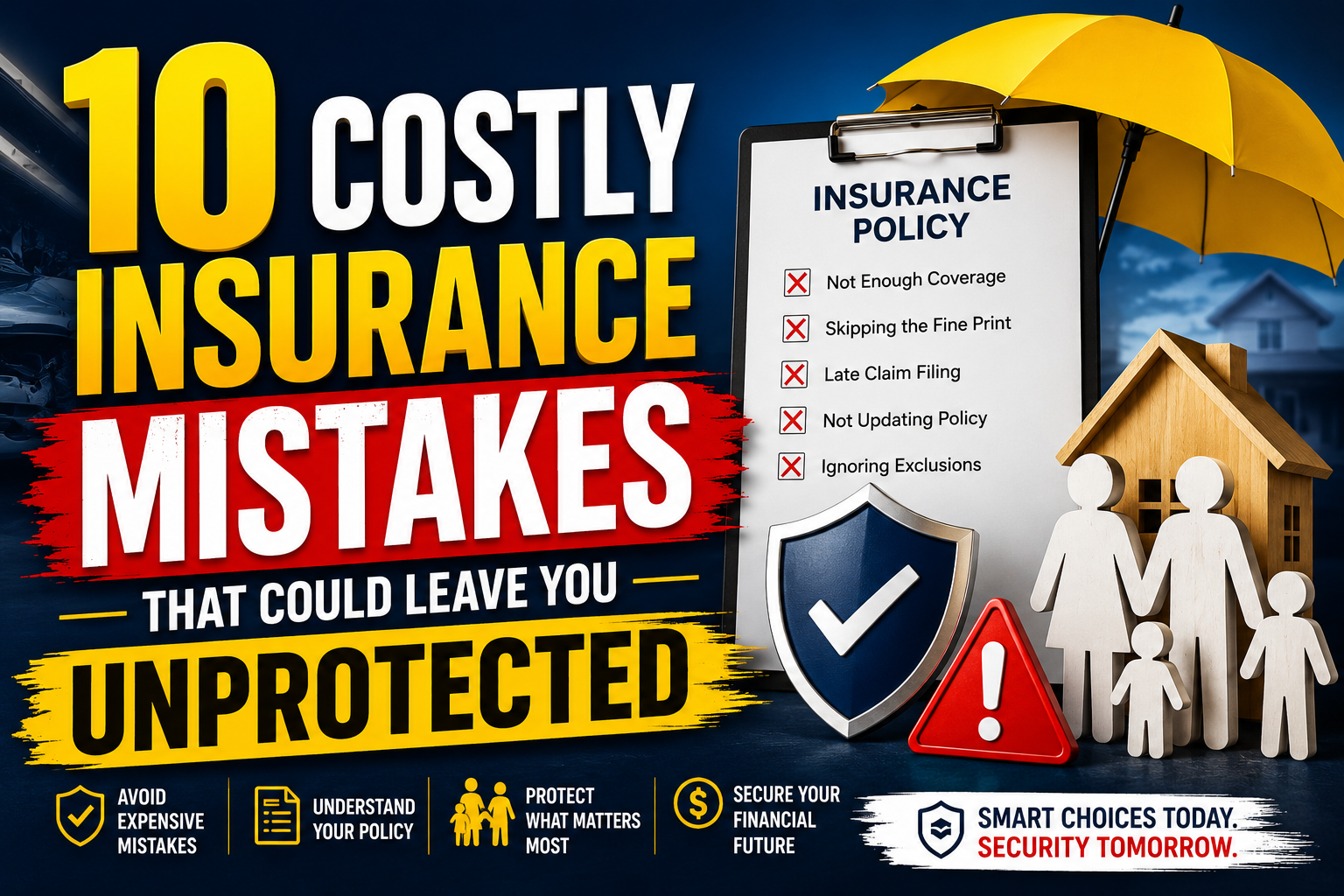
Insurance is one of the smartest financial investments you can make. Whether it’s health, life, auto, home, travel, or business insurance, the right policy provides peace of mind by protecting you from unexpected financial losses.
Unfortunately, many people believe that simply purchasing an insurance policy is enough. The truth is that having insurance doesn’t automatically mean you’re fully protected. Small mistakes made before, during, or after purchasing a policy can result in denied claims, insufficient payouts, or even complete loss of coverage.
Imagine paying premiums faithfully for years, only to discover after an accident that your insurance doesn’t cover the situation you assumed it would. Unfortunately, this happens more often than most people realize.
The good news is that these costly mistakes are completely avoidable.
In this comprehensive guide, we’ll explore the ten biggest insurance mistakes people make and explain exactly how you can avoid them.
1. Buying Insurance Based Only on Price
Everyone wants to save money. However, choosing the cheapest insurance policy without comparing what it actually covers is one of the biggest financial mistakes you can make.
Low-cost insurance policies often come with:
- Lower coverage limits
- Higher deductibles
- More exclusions
- Limited customer support
- Slower claims processing
Many people celebrate saving a few dollars every month, only to discover later that they need to pay thousands out of pocket because their policy doesn’t provide adequate protection.
For example, two auto insurance policies may appear similar in price, but one may include roadside assistance, rental reimbursement, and comprehensive coverage, while the cheaper option covers only liability.
How to avoid this mistake:
Always compare:
- Coverage limits
- Deductibles
- Exclusions
- Claims process
- Customer reviews
- Financial strength of the insurer
Remember, the cheapest insurance can become the most expensive when you actually need it.
2. Not Understanding What Your Policy Covers
Insurance policies contain terms, conditions, exclusions, waiting periods, and limitations that many people never read.
Instead, they assume everything is covered.
This assumption can become extremely costly.
For example, a homeowner might believe flood damage is included in their home insurance when, in reality, flood coverage often requires a separate policy.
Similarly, some health insurance plans exclude certain treatments, medications, or specialist visits.
Before purchasing any insurance policy, understand:
- What is covered
- What isn’t covered
- Coverage limits
- Waiting periods
- Deductibles
- Claim requirements
If anything is unclear, ask your insurance advisor to explain it in simple language.
Never sign a policy you don’t understand.
3. Being Underinsured
Many people underestimate how much coverage they actually need.
This happens because they focus on reducing premiums instead of protecting their financial future.
For instance:
A business owner insures equipment worth $100,000 for only $50,000 to save money.
If a fire destroys everything, they’ll receive only part of the actual loss.
The remaining financial burden falls on them.
Underinsurance is especially common with:
- Home insurance
- Business insurance
- Life insurance
- Health insurance
Your insurance should reflect today’s replacement costs—not what you originally paid years ago.
Review your coverage regularly to ensure it still matches current values.
4. Ignoring Policy Exclusions
Every insurance policy includes exclusions.
These are situations where the insurance company will not pay.
Many people discover these exclusions only after filing a claim.
Examples include:
- Flood damage
- Earthquakes
- Intentional damage
- Certain medical conditions
- High-risk business activities
- Wear and tear
Understanding exclusions helps prevent unpleasant surprises.
Always ask:
“What situations are NOT covered?”
That simple question can save you thousands later.
5. Providing Incorrect or Incomplete Information
Honesty is one of the foundations of insurance.
When applying for coverage, insurance companies rely on the information you provide.
Some applicants intentionally hide information to lower premiums.
Others simply make mistakes.
Examples include:
- Incorrect income
- Wrong address
- Previous accidents
- Existing medical conditions
- Business activities
- Vehicle modifications
If the insurer discovers false information during a claim investigation, they may deny the claim or even cancel the policy.
Always provide complete and accurate information.
If your situation changes later, notify your insurer immediately.
6. Failing to Update Your Insurance Policy
Life changes constantly.
Unfortunately, many insurance policies stay exactly the same for years.
Major life events should trigger an insurance review.
Examples include:
- Marriage
- Divorce
- Birth of a child
- Buying a home
- Starting a business
- Retirement
- Purchasing expensive assets
Suppose you renovate your home and increase its value significantly.
If your insurance still reflects the old value, your payout after a disaster may not cover rebuilding costs.
Review your policies at least once every year.
Keeping your insurance updated ensures your protection grows with your life.
7. Letting Your Policy Lapse
Missing premium payments can have serious consequences.
Many insurers provide a grace period, but once that expires, your coverage may end.
A lapse means:
- No protection
- Claims may be denied
- Higher premiums later
- Reapplication may require new underwriting
Some people discover their policy expired only after an accident.
Automatic payments and payment reminders can help prevent this mistake.
Always ensure your premiums are paid on time.
8. Waiting Too Long to File a Claim
Insurance companies often require claims to be filed within specific deadlines.
Delaying can make it difficult to investigate the incident properly.
Important evidence may disappear.
Witnesses may become unavailable.
Documents may be lost.
As a result, your claim could be delayed or denied.
After any incident:
- Notify your insurer immediately.
- Take photographs.
- Gather receipts.
- Obtain police reports if necessary.
- Keep all supporting documents.
Prompt reporting significantly improves the chances of a successful claim.
9. Not Comparing Insurance Providers
Many people automatically renew their insurance every year without comparing alternatives.
This could mean paying higher premiums for fewer benefits.
Different insurers offer:
- Different prices
- Different customer service
- Different claim approval rates
- Additional benefits
- Better discounts
Shopping around every year doesn’t necessarily mean changing insurers.
It simply helps you understand what’s available.
Sometimes your current insurer may even match a competitor’s offer if you ask.
Comparing policies is one of the easiest ways to improve your coverage while controlling costs.
10. Believing Insurance Is a “Set It and Forget It” Purchase
Insurance isn’t something you buy once and never think about again.
Financial needs change.
Family circumstances change.
Assets appreciate.
Laws evolve.
Healthcare costs increase.
Business risks expand.
Your insurance should evolve too.
Make it a habit to review your insurance portfolio annually.
Ask yourself:
- Do I have enough coverage?
- Have my assets increased?
- Have my liabilities changed?
- Are there new risks I should insure?
- Can I reduce unnecessary coverage?
A yearly review helps ensure your insurance remains aligned with your current life.
Bonus Tips to Stay Fully Protected
Beyond avoiding these ten mistakes, consider these additional best practices:
Keep Copies of All Insurance Documents
Store digital and physical copies of:
- Policies
- Payment receipts
- Renewal notices
- Claim documents
Having quick access can speed up the claims process.
Understand Your Deductible
Many policyholders forget they must pay a deductible before insurance contributes.
Choose a deductible you can comfortably afford during an emergency.
Bundle Policies
Many insurers offer discounts when you combine:
- Home insurance
- Auto insurance
- Life insurance
Bundling may lower premiums while simplifying policy management.
Work With Trusted Insurance Professionals
A knowledgeable insurance advisor can help identify coverage gaps and recommend suitable protection based on your needs.
Don’t rely solely on advertisements or price comparisons.
Professional advice can prevent expensive mistakes.
Frequently Asked Questions (FAQs)
What is the biggest insurance mistake people make?
The most common mistake is purchasing insurance based solely on price without understanding what the policy actually covers.
How often should I review my insurance policy?
Experts generally recommend reviewing your policies at least once a year or whenever you experience a major life event such as marriage, buying a home, starting a business, or having children.
Can an insurance company deny my claim?
Yes. Claims may be denied if the event isn’t covered, premiums haven’t been paid, false information was provided, or policy conditions weren’t followed.
Why is underinsurance dangerous?
Being underinsured means your coverage isn’t sufficient to cover the full cost of a loss, leaving you responsible for the remaining expenses.
Should I always choose the cheapest insurance?
No. The best policy balances affordability with adequate coverage, reliable customer service, and a strong claims history.
Final Thoughts
Insurance exists to protect you during life’s most challenging moments. However, that protection is only effective if you understand your policy, maintain appropriate coverage, and avoid common mistakes.
Buying insurance isn’t just about fulfilling a legal requirement or checking a financial box—it’s about safeguarding your health, family, home, business, and future.
By avoiding the ten mistakes outlined in this guide, you’ll greatly reduce the risk of unexpected financial hardship and ensure that your insurance works exactly as intended when you need it most.
Take some time today to review your existing policies. Ask questions, update outdated information, compare coverage options, and make informed decisions. A small amount of effort now could save you thousands—and provide invaluable peace of mind—in the future.
Remember: the best insurance policy isn’t simply the one with the lowest premium; it’s the one that offers the right protection for your unique needs. Invest wisely, stay informed, and let your insurance serve as the safety net it was designed to be.

Owning a car comes with many ongoing expenses—fuel, maintenance, repairs, registration fees, and one of the most significant recurring costs: car insurance. While insurance is essential for protecting yourself financially after an accident, many drivers end up paying far more than necessary.
The good news is that reducing your car insurance costs doesn’t mean settling for inadequate coverage. With the right strategies, you can lower your premiums while maintaining the protection you need.
Many people make the mistake of cutting coverage to save money, only to regret it when an accident or theft occurs. Instead of reducing your protection, the smarter approach is to optimize your policy, take advantage of available discounts, and make informed decisions that reduce your overall insurance costs.
In this guide, we’ll explore proven ways to save money on car insurance without sacrificing the coverage that keeps you and your finances protected.
Why Car Insurance Is Essential
Car insurance isn’t just a legal requirement in many places—it’s also an important financial safeguard.
A good policy can help cover:
- Vehicle repairs
- Medical expenses
- Damage to another person’s property
- Legal liability
- Theft
- Fire damage
- Natural disasters (depending on coverage)
- Vandalism
- Emergency roadside assistance
Without insurance, even a relatively minor accident could result in thousands of dollars in out-of-pocket expenses.
The goal isn’t to spend less by removing protection—it’s to spend smarter.
1. Compare Quotes From Multiple Insurance Companies
One of the easiest ways to save money is to compare quotes before purchasing or renewing your policy.
Insurance companies calculate premiums differently based on factors such as:
- Driving history
- Age
- Vehicle type
- Location
- Claims history
- Credit profile (where applicable)
Because each insurer uses its own pricing model, two companies may quote significantly different premiums for nearly identical coverage.
Whenever your policy is due for renewal:
- Get quotes from at least three insurers.
- Compare coverage—not just price.
- Review deductibles.
- Check optional benefits.
A little research could save hundreds of dollars each year.
2. Increase Your Deductible (If You Can Afford It)
A deductible is the amount you agree to pay before your insurance company contributes toward a covered claim.
For example:
If your deductible is $500 and repairs cost $3,000, you’ll pay the first $500, while your insurer pays the remaining eligible amount.
Policies with higher deductibles usually have lower monthly premiums.
However, only choose a higher deductible if you have enough emergency savings to cover it when needed.
3. Bundle Multiple Insurance Policies
Many insurers reward customers who purchase more than one policy.
Common bundles include:
- Auto and home insurance
- Auto and renters insurance
- Auto and life insurance
Bundling often provides:
- Multi-policy discounts
- Simplified billing
- Easier policy management
- Potential loyalty rewards
Always compare bundled pricing with separate policies to ensure you’re receiving a genuine discount.
4. Maintain a Clean Driving Record
Your driving history has one of the biggest impacts on your insurance premium.
Drivers with fewer accidents and traffic violations are generally viewed as lower-risk customers.
To maintain lower premiums:
- Obey speed limits.
- Avoid distracted driving.
- Never drive under the influence.
- Follow traffic laws.
- Practice defensive driving.
Many insurers also reward accident-free drivers with safe driver discounts or no-claim bonuses.
5. Ask About Available Discounts
Many policyholders never realize how many discounts insurers offer.
Depending on your insurer, you may qualify for discounts such as:
- Safe driver discount
- Multi-policy discount
- Good student discount
- Defensive driving course discount
- Low-mileage discount
- Anti-theft device discount
- Vehicle safety feature discount
- Automatic payment discount
- Paperless billing discount
- Loyalty discount
Always ask your insurance provider about every available discount—you may be eligible without realizing it.
6. Avoid Paying for Coverage You Don’t Need
Not every optional feature is necessary for every driver.
Review your policy and identify any extras you rarely use.
Examples might include:
- Rental car reimbursement
- Roadside assistance (if you already have it elsewhere)
- Duplicate medical coverage
- Optional accessories coverage
Be careful not to remove essential protection simply to reduce your premium.
Focus on eliminating unnecessary costs, not necessary coverage.
7. Drive Fewer Miles
Many insurance companies consider annual mileage when calculating premiums.
Generally, drivers who spend less time on the road have a lower risk of accidents.
If you:
- Work remotely
- Use public transportation frequently
- Have multiple vehicles
- Drive only occasionally
you may qualify for low-mileage discounts.
Keep accurate records of your annual mileage and update your insurer if your driving habits change.
8. Choose the Right Vehicle
The type of car you drive significantly affects your insurance costs.
Insurance companies consider:
- Repair costs
- Theft rates
- Safety ratings
- Engine performance
- Replacement value
Luxury cars, sports cars, and vehicles with expensive repair costs typically carry higher premiums.
If you’re planning to purchase a new vehicle, compare insurance costs before making your decision.
Sometimes two similarly priced vehicles have dramatically different insurance rates.
9. Improve Your Vehicle’s Security
Cars equipped with modern safety and anti-theft features may qualify for lower premiums.
Examples include:
- Alarm systems
- GPS tracking
- Immobilizers
- Steering wheel locks
- Dash cameras
- Garage parking
These features reduce the likelihood of theft and may decrease insurance risk.
10. Review Your Policy Every Year
Many drivers automatically renew their policies without checking whether their needs have changed.
Review your coverage annually and ask:
- Is my vehicle still worth full comprehensive coverage?
- Am I paying for unnecessary add-ons?
- Have new discounts become available?
- Has my annual mileage changed?
- Can I increase my deductible?
Regular reviews ensure you’re paying only for the protection you actually need.
11. Pay Your Premium Annually If Possible
Some insurers charge additional administrative fees for monthly payments.
If your budget allows, paying annually may:
- Reduce total costs
- Eliminate installment fees
- Simplify policy management
Always compare the annual cost with monthly payment options before deciding.
12. Maintain a Good Credit Profile (Where Applicable)
In some countries, insurers consider credit history when determining premiums.
A strong credit profile may indicate responsible financial behavior and can sometimes result in lower insurance costs.
While credit scoring practices vary by location, maintaining healthy financial habits can benefit you in multiple ways.
Common Mistakes That Increase Insurance Costs
Avoid these expensive habits:
- Filing numerous small claims
- Allowing your policy to lapse
- Providing inaccurate information
- Choosing coverage based solely on price
- Ignoring available discounts
- Failing to compare insurers
- Purchasing unnecessary add-ons
- Driving recklessly
Small mistakes can gradually increase your premiums over time.
How Much Coverage Do You Really Need?
The answer depends on several factors, including:
- Vehicle value
- Personal finances
- Legal requirements
- Driving habits
- Local accident rates
- Loan or lease requirements
A financed vehicle often requires comprehensive and collision coverage.
Older vehicles with low market value may not need the same level of protection.
Consult your insurer or financial advisor to determine appropriate coverage based on your circumstances.
Frequently Asked Questions (FAQs)
Can I lower my car insurance without reducing coverage?
Yes. Comparing quotes, bundling policies, increasing your deductible, maintaining a safe driving record, and qualifying for discounts can all reduce premiums while preserving your coverage.
Does a higher deductible always save money?
Higher deductibles typically lower monthly premiums, but you should choose one that you can comfortably afford if you need to file a claim.
How often should I compare insurance quotes?
At least once a year, especially before renewing your policy.
Do safe drivers really pay less?
In most cases, yes. Drivers with clean driving records often qualify for lower premiums and additional discounts.
Is the cheapest insurance policy always the best?
No. The lowest-priced policy may provide insufficient protection or include higher deductibles and more exclusions. Always compare value rather than price alone.
Final Thoughts
Saving money on car insurance doesn’t require sacrificing the protection that keeps you financially secure. Instead of removing essential coverage, focus on making informed decisions that reduce unnecessary costs while maintaining adequate protection.
Comparing quotes, driving safely, taking advantage of available discounts, bundling policies, reviewing your coverage regularly, and choosing the right deductible are all effective ways to lower your insurance premiums without exposing yourself to unnecessary financial risk.
Remember, the best car insurance policy isn’t simply the cheapest one—it’s the one that provides reliable protection at a price that fits your budget. By following the strategies outlined in this guide, you can enjoy meaningful savings while ensuring you’re prepared for whatever the road may bring.
Take time to review your current policy today. A few simple adjustments could help you save hundreds of dollars each year without compromising the coverage you depend on.

Life is full of uncertainties, but one thing every parent and provider wants is the peace of mind that their family will be financially secure no matter what happens. That’s where life insurance comes in.
For families, life insurance isn’t just another financial product—it’s a promise. It’s a commitment that your spouse, children, or other dependents will have the financial support they need if you’re no longer there to provide for them.
In 2026, families have access to more life insurance options than ever before. From affordable term life insurance to permanent policies that build cash value, choosing the right plan can feel overwhelming. The key is understanding what each type of policy offers and selecting one that fits your family’s current and future financial needs.
This comprehensive guide explores the best life insurance plans for families in 2026, the features to look for, how much coverage you may need, and practical tips for finding the best value without compromising protection.
Why Every Family Needs Life Insurance
Many people believe life insurance is only necessary for older adults or high-income earners. In reality, almost every family can benefit from having adequate life insurance coverage.
If your family depends on your income, your unpaid caregiving, or your financial contributions, life insurance helps ensure they won’t face immediate financial hardship if you pass away unexpectedly.
A life insurance payout can help your loved ones:
- Replace lost income
- Pay household expenses
- Cover mortgage or rent payments
- Settle outstanding debts
- Fund children’s education
- Pay funeral and burial expenses
- Maintain their standard of living
- Build financial stability during a difficult period
Without life insurance, families may struggle to meet everyday financial obligations during an already emotional time.
What Makes a Great Family Life Insurance Plan?
Not every policy is suitable for every family. The best life insurance plan should offer a balance of affordability, flexibility, and adequate coverage.
When comparing policies, look for:
- Affordable monthly premiums
- Sufficient death benefit
- Financially strong insurance provider
- Flexible policy options
- Optional riders and add-ons
- Easy claims process
- Guaranteed renewability (where applicable)
- Excellent customer service
Choosing a policy based solely on the lowest premium can leave your family underprotected.
Best Types of Life Insurance for Families
1. Term Life Insurance (Best Overall for Most Families)
Term life insurance remains the most popular option for families because it provides high coverage at relatively affordable prices.
A term policy lasts for a fixed period, such as:
- 10 years
- 20 years
- 25 years
- 30 years
If the insured person dies during the policy term, beneficiaries receive the death benefit.
Pros
- Lower premiums
- Large coverage amounts
- Easy to understand
- Ideal for young families
- Excellent value for money
Cons
- Coverage ends when the term expires
- No cash value
Best for: Young parents, homeowners, and families with children.
2. Whole Life Insurance
Whole life insurance provides lifelong coverage and includes a cash value component that grows over time.
Unlike term insurance, the policy doesn’t expire as long as premiums are paid.
Benefits
- Lifetime protection
- Guaranteed payout
- Cash value accumulation
- Fixed premiums
Drawbacks
- Higher premiums
- Lower initial coverage compared to term insurance
Best for: Families seeking long-term financial planning and wealth transfer.
3. Universal Life Insurance
Universal life insurance combines permanent coverage with flexible premiums and adjustable death benefits.
Some policies also allow the cash value to earn interest.
Advantages
- Flexible payments
- Lifetime coverage
- Cash value growth
- Adjustable coverage
Considerations
- More complex than term insurance
- Returns may vary depending on the policy structure
Best for: Families with changing financial circumstances who want flexibility.
4. Joint Life Insurance
Joint life insurance covers two individuals—usually spouses—under one policy.
Depending on the policy type, it may pay:
- After the first insured person dies, or
- After both insured individuals have passed away.
Benefits
- One policy for two people
- Potentially lower premiums
- Simplified policy management
Downsides
- Less flexibility
- May not meet every family’s individual needs
How Much Life Insurance Does Your Family Need?
There’s no one-size-fits-all answer, but your coverage should reflect your family’s financial responsibilities.
Consider factors such as:
- Annual income
- Outstanding mortgage
- Personal loans
- Credit card debt
- Childcare expenses
- Future education costs
- Daily living expenses
- Emergency savings
- Existing investments
Many financial advisors suggest coverage equal to 10–15 times your annual income, but your ideal amount depends on your specific circumstances.
For example:
If you earn $60,000 annually, a policy between $600,000 and $900,000 may provide meaningful protection for your dependents.
Key Features to Look for in 2026
Insurance providers continue to improve their products with features that add flexibility and value.
When shopping in 2026, consider policies that offer:
Accelerated Death Benefit
Allows access to part of the death benefit if diagnosed with a qualifying terminal illness.
Child Rider
Provides life insurance coverage for your children under your existing policy.
Waiver of Premium
Keeps your policy active if you become permanently disabled and are unable to pay premiums.
Accidental Death Benefit
Provides additional financial protection if death occurs due to a covered accident.
Guaranteed Insurability
Allows you to increase coverage later without another medical examination.
Factors That Affect Your Premium
Insurance companies calculate premiums based on several risk factors.
Common considerations include:
- Age
- Gender
- Health
- Smoking status
- Occupation
- Lifestyle
- Family medical history
- Coverage amount
- Policy type
- Policy duration
Generally, younger and healthier applicants receive lower premiums.
Buying early often saves money over the long term.
Common Mistakes Families Should Avoid
Many families unintentionally make costly life insurance mistakes.
Avoid these common errors:
Waiting Too Long
Premiums usually increase with age, and health issues may limit your options.
Buying Too Little Coverage
A small policy may not adequately replace lost income or cover future expenses.
Naming the Wrong Beneficiary
Review your beneficiaries regularly after marriage, divorce, or the birth of a child.
Choosing Based Only on Price
The cheapest policy isn’t always the best. Compare coverage, features, and insurer reputation.
Forgetting to Update Your Policy
Major life events often require additional coverage.
How to Compare Life Insurance Policies
Before purchasing a policy, compare:
- Monthly premiums
- Death benefit
- Policy length
- Optional riders
- Cash value (if applicable)
- Claim settlement history
- Customer reviews
- Financial strength of the insurer
- Customer service quality
Comparing multiple providers helps ensure you receive the best value.
Tips to Save Money on Life Insurance
Families can reduce costs without sacrificing protection by following these strategies:
Buy While You’re Young
Premiums are generally lower when you’re younger and healthier.
Maintain Good Health
Healthy habits may qualify you for better rates.
Avoid Smoking
Smokers typically pay significantly higher premiums.
Compare Quotes
Request estimates from multiple insurers before making a decision.
Purchase the Right Amount
Avoid paying for excessive coverage you don’t need, but don’t leave your family underinsured.
Review Coverage Periodically
Adjust your policy as your financial responsibilities change.
Who Should Consider Life Insurance?
Life insurance is especially important if you:
- Are married
- Have children
- Support aging parents
- Own a home
- Have outstanding debts
- Own a business
- Want to leave an inheritance
- Plan for future education expenses
Even stay-at-home parents may benefit from life insurance because replacing childcare and household responsibilities can be costly.
Frequently Asked Questions (FAQs)
What is the best life insurance policy for families?
For most families, term life insurance offers the best balance of affordability and substantial coverage. However, the ideal policy depends on your financial goals and long-term needs.
How much life insurance should parents have?
Many experts recommend coverage equal to 10–15 times annual income, though the right amount varies based on debts, dependents, savings, and future financial obligations.
Is whole life insurance better than term life insurance?
Neither is universally better. Term life insurance is generally more affordable, while whole life insurance provides lifelong coverage and builds cash value.
Can both parents have separate life insurance policies?
Yes. In many cases, each parent should have their own policy to ensure adequate financial protection regardless of which spouse passes away first.
When is the best time to buy life insurance?
The earlier, the better. Purchasing life insurance while you’re young and healthy often results in lower premiums and more coverage options.
Final Thoughts
Life insurance is one of the most meaningful financial gifts you can provide your family. It offers security, stability, and peace of mind during life’s most difficult moments. While no policy can replace a loved one, the right life insurance plan can ease financial burdens and help your family maintain their quality of life.
In 2026, families have a wide range of life insurance options to choose from, making it easier than ever to find a policy that fits both their budget and their long-term goals. Whether you choose an affordable term life policy, a permanent whole life plan, or a flexible universal life policy, the most important step is taking action.
Don’t wait until it’s too late. Review your family’s financial needs, compare your options carefully, and choose coverage that will protect the people who matter most. A thoughtful decision today can provide lasting security for your loved ones for years to come.
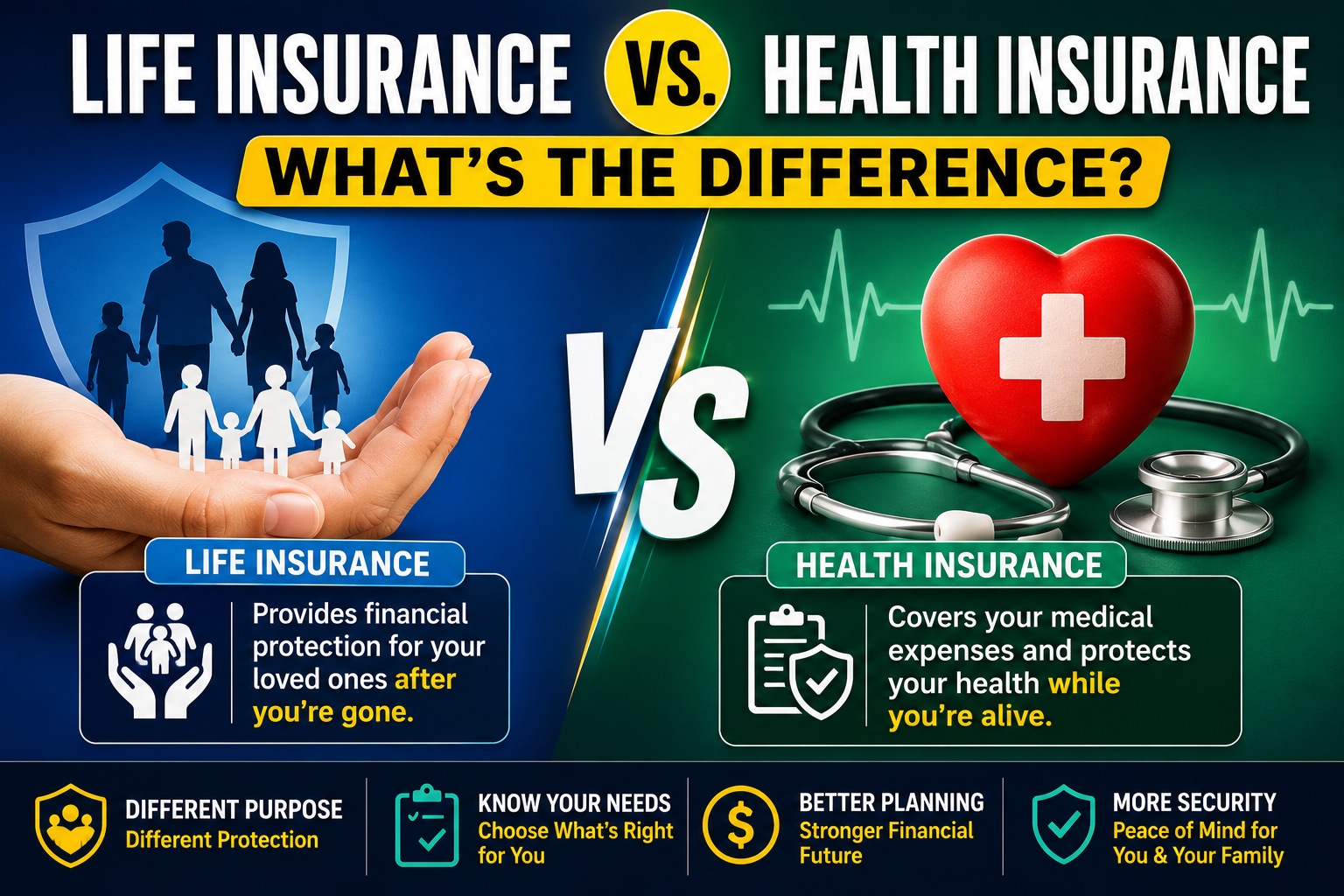
Insurance is one of the smartest financial decisions you can make, but with so many different types of coverage available, it’s easy to get confused. Two of the most commonly misunderstood types are life insurance and health insurance. While both are designed to provide financial protection, they serve very different purposes.
Many people mistakenly believe that having one type of insurance means they don’t need the other. In reality, life insurance and health insurance complement each other, covering different risks that could significantly impact your finances and your family’s well-being.
So, what exactly is the difference? Which one should you prioritize? And do you really need both?
In this comprehensive guide, we’ll break down everything you need to know about life insurance and health insurance, including how they work, what they cover, their benefits, key differences, and how to determine which one is right for you.
What Is Life Insurance?
Life insurance is a financial agreement between you and an insurance company. In exchange for regular premium payments, the insurer agrees to pay a predetermined sum of money—known as the death benefit—to your chosen beneficiaries if you pass away while the policy is active.
The primary purpose of life insurance is to provide financial security for your loved ones after your death.
The payout can be used to:
- Replace lost income
- Pay off outstanding debts
- Cover funeral expenses
- Fund children’s education
- Pay household bills
- Maintain the family’s lifestyle
- Leave an inheritance
Life insurance isn’t for you—it’s for the people who depend on you financially.
What Is Health Insurance?
Health insurance helps pay for medical expenses while you’re alive. Depending on your policy, it may cover doctor visits, surgeries, hospital stays, emergency treatment, medications, laboratory tests, specialist consultations, and preventive care.
Without health insurance, even a single hospitalization can cost thousands of dollars and place significant financial strain on individuals and families.
Health insurance exists to reduce the financial burden of unexpected medical expenses, ensuring you can receive quality healthcare without exhausting your savings.
The Main Purpose of Each Insurance Type
Understanding the core purpose of each policy makes the difference much clearer.
Life Insurance
Protects your family’s finances if you die.
Health Insurance
Protects your finances while you’re alive by helping cover healthcare costs.
Think of it this way:
- Life insurance protects your loved ones.
- Health insurance protects you.
What Does Life Insurance Cover?
Most life insurance policies provide a lump-sum payment to your beneficiaries after your death.
That money can be used however they choose, including:
- Mortgage payments
- Personal loans
- Credit card debt
- Funeral costs
- Daily living expenses
- Children’s education
- Business continuation
- Estate planning
Some policies also include optional riders, such as:
- Critical illness benefits
- Disability benefits
- Accidental death benefits
- Terminal illness benefits
Coverage depends on the specific policy you purchase.
What Does Health Insurance Cover?
Health insurance coverage varies by provider and plan but commonly includes:
- Hospital admissions
- Emergency care
- Surgical procedures
- Doctor consultations
- Prescription medications
- Diagnostic tests
- Laboratory services
- Preventive checkups
- Vaccinations
- Maternity care (depending on the policy)
- Mental health treatment (on some plans)
- Rehabilitation services
Some policies also provide access to telemedicine, wellness programs, and specialist referrals.
Always review the policy details to understand what is included and what exclusions apply.
Life Insurance vs. Health Insurance: Key Differences
| Feature | Life Insurance | Health Insurance |
|---|---|---|
| Purpose | Financial support after death | Pays medical expenses while alive |
| Who Benefits? | Your beneficiaries | You (the policyholder) |
| When It Pays | Upon death (or covered event) | During illness, injury, or medical treatment |
| Type of Payment | Lump-sum benefit | Reimbursement or direct payment for healthcare services |
| Main Goal | Protect your family’s financial future | Protect you from high healthcare costs |
| Covers Funeral Expenses? | Yes (through the death benefit) | No |
| Covers Hospital Bills? | No | Yes |
| Protects Dependents? | Indirectly through financial support | Primarily protects the insured individual |
Types of Life Insurance
1. Term Life Insurance
Provides coverage for a specific period, such as 10, 20, or 30 years.
Advantages:
- Lower premiums
- High coverage
- Simple structure
Ideal for young families and people with temporary financial responsibilities.
2. Whole Life Insurance
Provides lifelong coverage as long as premiums are paid.
Features:
- Lifetime protection
- Cash value accumulation
- Fixed premiums
Generally more expensive than term life insurance.
3. Universal Life Insurance
Offers flexible premiums and adjustable coverage with a savings component.
Suitable for people seeking long-term financial planning.
Types of Health Insurance
Individual Health Insurance
Designed for one person.
Family Health Insurance
Covers multiple family members under one policy.
Employer-Sponsored Health Insurance
Provided through an employer, often with shared premium costs.
Critical Illness Insurance
Pays a lump sum upon diagnosis of specified serious illnesses such as cancer, heart attack, or stroke.
Senior Health Insurance
Tailored to older adults with age-specific healthcare needs.
Who Should Buy Life Insurance?
Life insurance is especially important if you:
- Have children
- Are married
- Support aging parents
- Own a home with a mortgage
- Have outstanding debts
- Own a business
- Want to leave a financial legacy
If someone depends on your income, life insurance is worth considering.
Who Needs Health Insurance?
Everyone can benefit from health insurance because illness and accidents are often unpredictable.
Health insurance is particularly important if you:
- Have a family
- Have chronic health conditions
- Want access to quality healthcare
- Cannot afford unexpected medical bills
- Want financial protection against rising healthcare costs
Even healthy individuals may face emergencies that require expensive treatment.
Can You Have Both?
Absolutely—and for many people, having both is the ideal approach.
Life insurance and health insurance do not replace one another.
Instead, they work together to provide comprehensive financial protection.
For example:
Imagine you’re hospitalized after an accident.
Your health insurance helps pay your medical expenses.
Years later, if you pass away unexpectedly, your life insurance provides financial support to your family.
Each policy protects against a different type of financial risk.
Common Misconceptions
“I’m Young, So I Don’t Need Insurance.”
Young adults are often healthier and may qualify for lower premiums. Purchasing insurance early can lock in affordable rates.
“Life Insurance Covers Medical Bills.”
Generally, no. Life insurance pays a death benefit to beneficiaries after the insured person’s death.
“Health Insurance Pays My Family If I Die.”
Health insurance covers medical treatment while you’re alive. It does not provide a death benefit.
“Insurance Is Too Expensive.”
Many affordable options are available. The cost of being uninsured is often far greater than the cost of premiums.
How to Choose the Right Policy
When choosing life insurance, consider:
- Your income
- Family responsibilities
- Outstanding debts
- Future financial goals
- Desired coverage amount
When choosing health insurance, evaluate:
- Premium costs
- Deductibles
- Coverage limits
- Network hospitals
- Prescription drug coverage
- Waiting periods
- Exclusions
- Claim process
Take time to compare multiple insurers before making a decision.
Tips for Saving Money on Insurance
- Compare quotes from several insurers.
- Bundle policies when possible.
- Maintain a healthy lifestyle.
- Review your coverage annually.
- Ask about discounts.
- Choose appropriate deductibles.
- Avoid unnecessary add-ons.
Saving money shouldn’t come at the expense of adequate protection.
Frequently Asked Questions (FAQs)
Which is more important: life insurance or health insurance?
Both serve different purposes. Health insurance protects you from medical expenses, while life insurance protects your family’s financial future after your death.
Can I buy both life and health insurance?
Yes. In fact, many financial experts recommend having both to ensure comprehensive protection.
Does life insurance cover hospitalization?
No. Hospitalization and medical treatment are generally covered by health insurance, not life insurance.
Can I get life insurance if I have health issues?
Yes, although premiums may be higher depending on your medical condition and the insurer’s underwriting guidelines.
Is health insurance mandatory?
Requirements vary by country and jurisdiction. Even where it’s not legally required, having health insurance is strongly recommended due to the high cost of medical care.
Final Thoughts
Life insurance and health insurance are both essential financial tools, but they are designed to solve different problems. Health insurance protects you while you’re alive by helping manage the cost of medical care, while life insurance protects the people you leave behind by providing financial support after your passing.
Rather than choosing one over the other, consider how each fits into your overall financial plan. If your budget allows, having both types of coverage provides a stronger safety net for you and your loved ones.
The key is to assess your personal circumstances, compare policies carefully, and choose coverage that aligns with your financial responsibilities and long-term goals. Insurance isn’t just about preparing for the unexpected—it’s about creating peace of mind, knowing that you and your family are protected no matter what life brings.
-

 Celebrities & Public Personalities8 months ago
AM Yerima Nigerian Navy Biography: Age, Father, State of Origin
-
 Celebrities & Public Personalities9 months ago
Maria Lourdes Ortaleza Biography: Age, Tribe, Height, Family
-
 Historical Figures8 months ago
Oburu Odinga Biography: Wives, Daughters, Net Worth, Family
-
 Celebrities & Public Personalities8 months ago
Shawn Faqua Biography: Wife, State of Origin, Age, Real Name
-
 Celebrities & Public Personalities9 months ago
David Skosana Biography: Wife, Date of Birth, Net Worth 2025
-
Celebrities & Public Personalities9 months ago
Diana Turova Biography: , Height, Tribe, Age, Net Worth, Career
-
 Celebrities & Public Personalities9 months ago
Soviet Lekganyane Biography: Wife, Age, Father, Parents 2025
-
 Celebrities & Public Personalities9 months ago
Ashley Sauls Biography: Wife, Home Language, Age, Family