Planning a trip is exciting. Whether you’re traveling for a relaxing vacation, a business conference, a family reunion, or an international adventure, you’ve probably spent time booking flights, reserving accommodations, and organizing your itinerary.
But there’s one important question many travelers overlook:
Should you buy travel insurance?
Some travelers never leave home without it, while others see it as an unnecessary expense. The truth is that travel insurance isn’t always essential—but in many situations, it can save you thousands of dollars and prevent a stressful trip from becoming a financial disaster.
Unexpected events can happen to anyone. Flights get canceled, luggage gets lost, illnesses occur abroad, and emergencies force travelers to cut their trips short. Travel insurance is designed to reduce the financial impact of these unforeseen situations.
In this comprehensive guide, we’ll explain what travel insurance is, what it covers, when it’s worth buying, when you may not need it, and how to choose the best policy for your travel plans.
What Is Travel Insurance?
Travel insurance is a policy that provides financial protection against certain unexpected events that may occur before or during your trip.
Depending on the policy you purchase, travel insurance may reimburse you for expenses related to:
- Trip cancellations
- Medical emergencies
- Emergency evacuation
- Lost luggage
- Delayed baggage
- Flight delays
- Missed connections
- Passport loss
- Personal liability
- Accidental death or disability
Coverage varies by insurer and policy type, so it’s important to understand exactly what your plan includes.
Why Travel Insurance Matters
Travel is unpredictable.
Even the best-planned trips can be disrupted by circumstances beyond your control.
Imagine these situations:
- You become seriously ill two days before departure.
- Your airline cancels your international flight.
- Your luggage disappears during a connecting flight.
- You need emergency surgery while traveling overseas.
- Political unrest forces you to leave your destination early.
- Severe weather delays your return home.
Without travel insurance, you may have to cover these unexpected expenses yourself.
A comprehensive travel insurance policy can provide both financial protection and peace of mind.
What Travel Insurance Typically Covers
Although coverage differs between providers, most comprehensive travel insurance policies include several core benefits.
1. Trip Cancellation Coverage
This reimburses prepaid, non-refundable travel expenses if you must cancel your trip for a covered reason.
Common covered reasons include:
- Serious illness
- Injury
- Death of a family member
- Natural disasters
- Jury duty
- Certain work-related emergencies
Covered expenses may include:
- Airline tickets
- Hotel reservations
- Tour packages
- Cruise bookings
- Event tickets
2. Trip Interruption Coverage
If your trip is unexpectedly cut short, this coverage may reimburse:
- Unused hotel nights
- Unused excursions
- Additional transportation costs
- Return travel expenses
Trip interruption coverage is especially valuable for expensive international vacations.
3. Emergency Medical Coverage
Medical treatment abroad can be extremely expensive, particularly in countries where healthcare costs are high.
Travel medical insurance may help cover:
- Hospitalization
- Emergency treatment
- Physician visits
- Prescription medications
- Ambulance services
- Emergency dental care
Some countries even require proof of travel medical insurance before issuing visas.
4. Emergency Medical Evacuation
If local medical facilities cannot adequately treat your condition, evacuation coverage may pay for transportation to an appropriate hospital.
This could involve:
- Air ambulance services
- Medical flights
- Specialized transportation
Medical evacuations can cost tens of thousands of dollars without insurance.
5. Lost, Stolen, or Delayed Baggage
Travel insurance may reimburse you if your luggage is:
- Lost
- Stolen
- Damaged
- Delayed
Coverage may include reimbursement for essential purchases such as:
- Clothing
- Toiletries
- Medication
- Personal necessities
6. Flight Delays and Missed Connections
If your flight is significantly delayed, your policy may reimburse expenses such as:
- Hotel accommodations
- Meals
- Transportation
- Rebooking fees
Missed connection benefits can also help cover costs when delays cause you to miss connecting flights.
7. Personal Liability Coverage
Some policies provide liability protection if you accidentally injure another person or damage someone else’s property while traveling.
Coverage varies significantly between insurers.
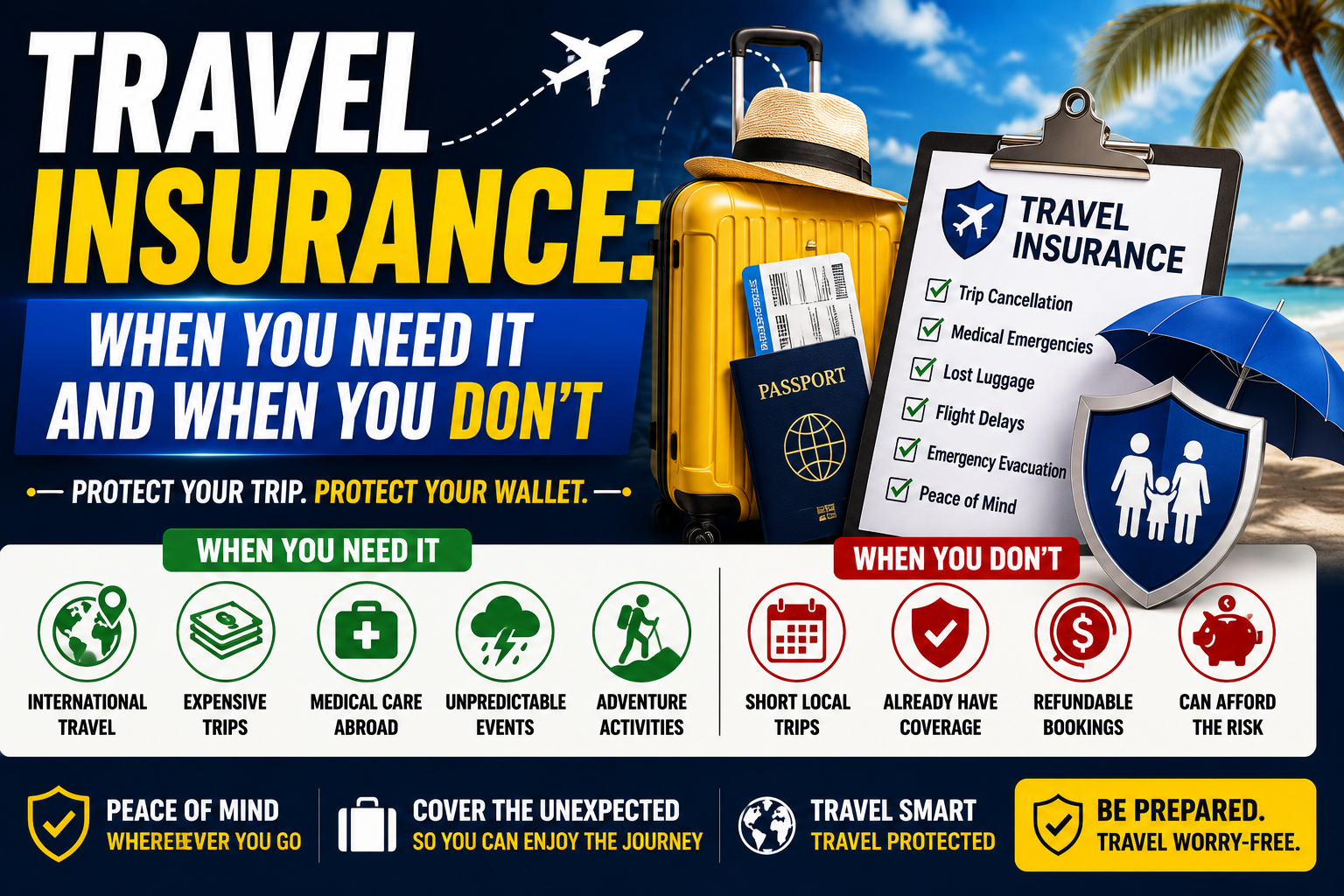
When You Should Buy Travel Insurance
Travel insurance isn’t necessary for every trip, but there are situations where it provides substantial value.
International Travel
Healthcare costs abroad can be unpredictable.
Many domestic health insurance plans offer little or no international coverage.
Travel insurance helps protect you from expensive medical bills overseas.
Expensive Vacations
If you’ve spent thousands of dollars on flights, hotels, cruises, or tours, travel insurance protects your financial investment.
Cruises
Cruise vacations often involve:
- Large upfront payments
- Strict cancellation policies
- International destinations
Travel insurance is frequently recommended for cruise travelers.
Adventure Activities
Planning activities such as:
- Skiing
- Scuba diving
- Mountain climbing
- Hiking
- Zip-lining
Check whether your policy covers adventure sports.
Some require optional coverage.
Traveling During Hurricane or Storm Seasons
Weather-related disruptions can significantly impact travel plans.
Insurance may help reimburse expenses caused by covered weather events.
Traveling With Children or Elderly Family Members
Medical emergencies and unexpected cancellations become more likely when traveling with young children or older adults.
Travel insurance provides additional peace of mind.
When You May Not Need Travel Insurance
Although travel insurance is valuable in many situations, it isn’t always necessary.
You might not need it if:
You’re Taking a Short Local Trip
If you’re traveling close to home for a weekend, your financial risk may be relatively low.
Your Trip Is Fully Refundable
If flights and accommodations can be canceled without penalties, insurance may provide limited additional value.
You Already Have Coverage Elsewhere
Some benefits may already be included through:
- Premium credit cards
- Employer travel policies
- Existing health insurance
- Membership organizations
Review your existing benefits before purchasing additional coverage.
You’re Comfortable Covering Potential Losses Yourself
Some travelers have sufficient savings to absorb unexpected travel expenses without financial hardship.
What Travel Insurance Usually Doesn’t Cover
Many travelers assume every problem is covered.
However, common exclusions often include:
- Pre-existing medical conditions (unless specifically covered)
- Traveling against government advisories
- Alcohol or drug-related incidents
- Illegal activities
- Routine medical care
- Cosmetic procedures
- High-risk sports without additional coverage
- Undeclared valuable belongings
Always read the policy wording carefully.
How Much Does Travel Insurance Cost?
Travel insurance typically costs between 4% and 10% of your total trip cost.
Several factors influence pricing, including:
- Traveler’s age
- Destination
- Trip duration
- Trip cost
- Coverage amount
- Optional benefits
- Medical history (where applicable)
Although it’s an additional expense, travel insurance is often inexpensive compared to the potential financial consequences of a serious travel emergency.
Tips for Choosing the Right Travel Insurance
When comparing policies, consider:
- Medical coverage limits
- Emergency evacuation benefits
- Cancellation coverage
- Baggage protection
- Claim process
- Customer reviews
- Insurer reputation
- Adventure activity coverage
- COVID-19 or infectious disease coverage (if applicable)
Choose a policy based on your travel plans—not simply the lowest premium.
Common Mistakes Travelers Make
Avoid these common errors:
- Buying insurance after problems have already occurred.
- Assuming all travel insurance policies are identical.
- Ignoring exclusions.
- Failing to disclose medical conditions.
- Underestimating medical costs abroad.
- Forgetting to check existing insurance benefits.
- Choosing the cheapest policy without comparing coverage.
Proper preparation reduces both financial and travel-related stress.
Frequently Asked Questions (FAQs)
Is travel insurance mandatory?
It depends on your destination. Some countries require proof of travel medical insurance before granting entry or issuing visas.
Does travel insurance cover medical emergencies?
Most comprehensive travel insurance policies include emergency medical coverage, but coverage limits and exclusions vary.
Is travel insurance worth it for domestic travel?
It depends on the cost of your trip, refund policies, and existing insurance coverage. For inexpensive local trips, it may not always be necessary.
Does travel insurance cover lost luggage?
Yes, many policies provide compensation for lost, stolen, or delayed baggage, subject to policy limits.
When should I buy travel insurance?
Ideally, purchase travel insurance soon after booking your trip to maximize eligibility for cancellation-related benefits.
Final Thoughts
Travel insurance isn’t about expecting something to go wrong—it’s about being prepared if it does. While not every trip requires insurance, many travelers find that the relatively small cost provides valuable financial protection and peace of mind.
If you’re traveling internationally, spending a significant amount on your vacation, participating in adventure activities, or visiting destinations where medical care is expensive, travel insurance is often a worthwhile investment.
Before purchasing a policy, take time to compare providers, understand what’s covered, review exclusions, and ensure the policy matches your travel plans. The best travel insurance isn’t necessarily the cheapest—it’s the one that offers the right protection for your specific journey.
With the right coverage in place, you can focus less on “what if?” and more on enjoying your trip with confidence.