
Others
How to Save Money on Car Insurance Without Losing Coverage (2026 Guide)


Owning a car comes with many ongoing expenses—fuel, maintenance, repairs, registration fees, and one of the most significant recurring costs: car insurance. While insurance is essential for protecting yourself financially after an accident, many drivers end up paying far more than necessary.
The good news is that reducing your car insurance costs doesn’t mean settling for inadequate coverage. With the right strategies, you can lower your premiums while maintaining the protection you need.
Many people make the mistake of cutting coverage to save money, only to regret it when an accident or theft occurs. Instead of reducing your protection, the smarter approach is to optimize your policy, take advantage of available discounts, and make informed decisions that reduce your overall insurance costs.
In this guide, we’ll explore proven ways to save money on car insurance without sacrificing the coverage that keeps you and your finances protected.
Why Car Insurance Is Essential
Car insurance isn’t just a legal requirement in many places—it’s also an important financial safeguard.
A good policy can help cover:
- Vehicle repairs
- Medical expenses
- Damage to another person’s property
- Legal liability
- Theft
- Fire damage
- Natural disasters (depending on coverage)
- Vandalism
- Emergency roadside assistance
Without insurance, even a relatively minor accident could result in thousands of dollars in out-of-pocket expenses.
The goal isn’t to spend less by removing protection—it’s to spend smarter.
1. Compare Quotes From Multiple Insurance Companies
One of the easiest ways to save money is to compare quotes before purchasing or renewing your policy.
Insurance companies calculate premiums differently based on factors such as:
- Driving history
- Age
- Vehicle type
- Location
- Claims history
- Credit profile (where applicable)
Because each insurer uses its own pricing model, two companies may quote significantly different premiums for nearly identical coverage.
Whenever your policy is due for renewal:
- Get quotes from at least three insurers.
- Compare coverage—not just price.
- Review deductibles.
- Check optional benefits.
A little research could save hundreds of dollars each year.
2. Increase Your Deductible (If You Can Afford It)
A deductible is the amount you agree to pay before your insurance company contributes toward a covered claim.
For example:
If your deductible is $500 and repairs cost $3,000, you’ll pay the first $500, while your insurer pays the remaining eligible amount.
Policies with higher deductibles usually have lower monthly premiums.
However, only choose a higher deductible if you have enough emergency savings to cover it when needed.
3. Bundle Multiple Insurance Policies
Many insurers reward customers who purchase more than one policy.
Common bundles include:
- Auto and home insurance
- Auto and renters insurance
- Auto and life insurance
Bundling often provides:
- Multi-policy discounts
- Simplified billing
- Easier policy management
- Potential loyalty rewards
Always compare bundled pricing with separate policies to ensure you’re receiving a genuine discount.
4. Maintain a Clean Driving Record
Your driving history has one of the biggest impacts on your insurance premium.
Drivers with fewer accidents and traffic violations are generally viewed as lower-risk customers.
To maintain lower premiums:
- Obey speed limits.
- Avoid distracted driving.
- Never drive under the influence.
- Follow traffic laws.
- Practice defensive driving.
Many insurers also reward accident-free drivers with safe driver discounts or no-claim bonuses.
5. Ask About Available Discounts
Many policyholders never realize how many discounts insurers offer.
Depending on your insurer, you may qualify for discounts such as:
- Safe driver discount
- Multi-policy discount
- Good student discount
- Defensive driving course discount
- Low-mileage discount
- Anti-theft device discount
- Vehicle safety feature discount
- Automatic payment discount
- Paperless billing discount
- Loyalty discount
Always ask your insurance provider about every available discount—you may be eligible without realizing it.
6. Avoid Paying for Coverage You Don’t Need
Not every optional feature is necessary for every driver.
Review your policy and identify any extras you rarely use.
Examples might include:
- Rental car reimbursement
- Roadside assistance (if you already have it elsewhere)
- Duplicate medical coverage
- Optional accessories coverage
Be careful not to remove essential protection simply to reduce your premium.
Focus on eliminating unnecessary costs, not necessary coverage.
7. Drive Fewer Miles
Many insurance companies consider annual mileage when calculating premiums.
Generally, drivers who spend less time on the road have a lower risk of accidents.
If you:
- Work remotely
- Use public transportation frequently
- Have multiple vehicles
- Drive only occasionally
you may qualify for low-mileage discounts.
Keep accurate records of your annual mileage and update your insurer if your driving habits change.
8. Choose the Right Vehicle
The type of car you drive significantly affects your insurance costs.
Insurance companies consider:
- Repair costs
- Theft rates
- Safety ratings
- Engine performance
- Replacement value
Luxury cars, sports cars, and vehicles with expensive repair costs typically carry higher premiums.
If you’re planning to purchase a new vehicle, compare insurance costs before making your decision.
Sometimes two similarly priced vehicles have dramatically different insurance rates.
9. Improve Your Vehicle’s Security
Cars equipped with modern safety and anti-theft features may qualify for lower premiums.
Examples include:
- Alarm systems
- GPS tracking
- Immobilizers
- Steering wheel locks
- Dash cameras
- Garage parking
These features reduce the likelihood of theft and may decrease insurance risk.
10. Review Your Policy Every Year
Many drivers automatically renew their policies without checking whether their needs have changed.
Review your coverage annually and ask:
- Is my vehicle still worth full comprehensive coverage?
- Am I paying for unnecessary add-ons?
- Have new discounts become available?
- Has my annual mileage changed?
- Can I increase my deductible?
Regular reviews ensure you’re paying only for the protection you actually need.
11. Pay Your Premium Annually If Possible
Some insurers charge additional administrative fees for monthly payments.
If your budget allows, paying annually may:
- Reduce total costs
- Eliminate installment fees
- Simplify policy management
Always compare the annual cost with monthly payment options before deciding.
12. Maintain a Good Credit Profile (Where Applicable)
In some countries, insurers consider credit history when determining premiums.
A strong credit profile may indicate responsible financial behavior and can sometimes result in lower insurance costs.
While credit scoring practices vary by location, maintaining healthy financial habits can benefit you in multiple ways.
Common Mistakes That Increase Insurance Costs
Avoid these expensive habits:
- Filing numerous small claims
- Allowing your policy to lapse
- Providing inaccurate information
- Choosing coverage based solely on price
- Ignoring available discounts
- Failing to compare insurers
- Purchasing unnecessary add-ons
- Driving recklessly
Small mistakes can gradually increase your premiums over time.
How Much Coverage Do You Really Need?
The answer depends on several factors, including:
- Vehicle value
- Personal finances
- Legal requirements
- Driving habits
- Local accident rates
- Loan or lease requirements
A financed vehicle often requires comprehensive and collision coverage.
Older vehicles with low market value may not need the same level of protection.
Consult your insurer or financial advisor to determine appropriate coverage based on your circumstances.
Frequently Asked Questions (FAQs)
Can I lower my car insurance without reducing coverage?
Yes. Comparing quotes, bundling policies, increasing your deductible, maintaining a safe driving record, and qualifying for discounts can all reduce premiums while preserving your coverage.
Does a higher deductible always save money?
Higher deductibles typically lower monthly premiums, but you should choose one that you can comfortably afford if you need to file a claim.
How often should I compare insurance quotes?
At least once a year, especially before renewing your policy.
Do safe drivers really pay less?
In most cases, yes. Drivers with clean driving records often qualify for lower premiums and additional discounts.
Is the cheapest insurance policy always the best?
No. The lowest-priced policy may provide insufficient protection or include higher deductibles and more exclusions. Always compare value rather than price alone.
Final Thoughts
Saving money on car insurance doesn’t require sacrificing the protection that keeps you financially secure. Instead of removing essential coverage, focus on making informed decisions that reduce unnecessary costs while maintaining adequate protection.
Comparing quotes, driving safely, taking advantage of available discounts, bundling policies, reviewing your coverage regularly, and choosing the right deductible are all effective ways to lower your insurance premiums without exposing yourself to unnecessary financial risk.
Remember, the best car insurance policy isn’t simply the cheapest one—it’s the one that provides reliable protection at a price that fits your budget. By following the strategies outlined in this guide, you can enjoy meaningful savings while ensuring you’re prepared for whatever the road may bring.
Take time to review your current policy today. A few simple adjustments could help you save hundreds of dollars each year without compromising the coverage you depend on.
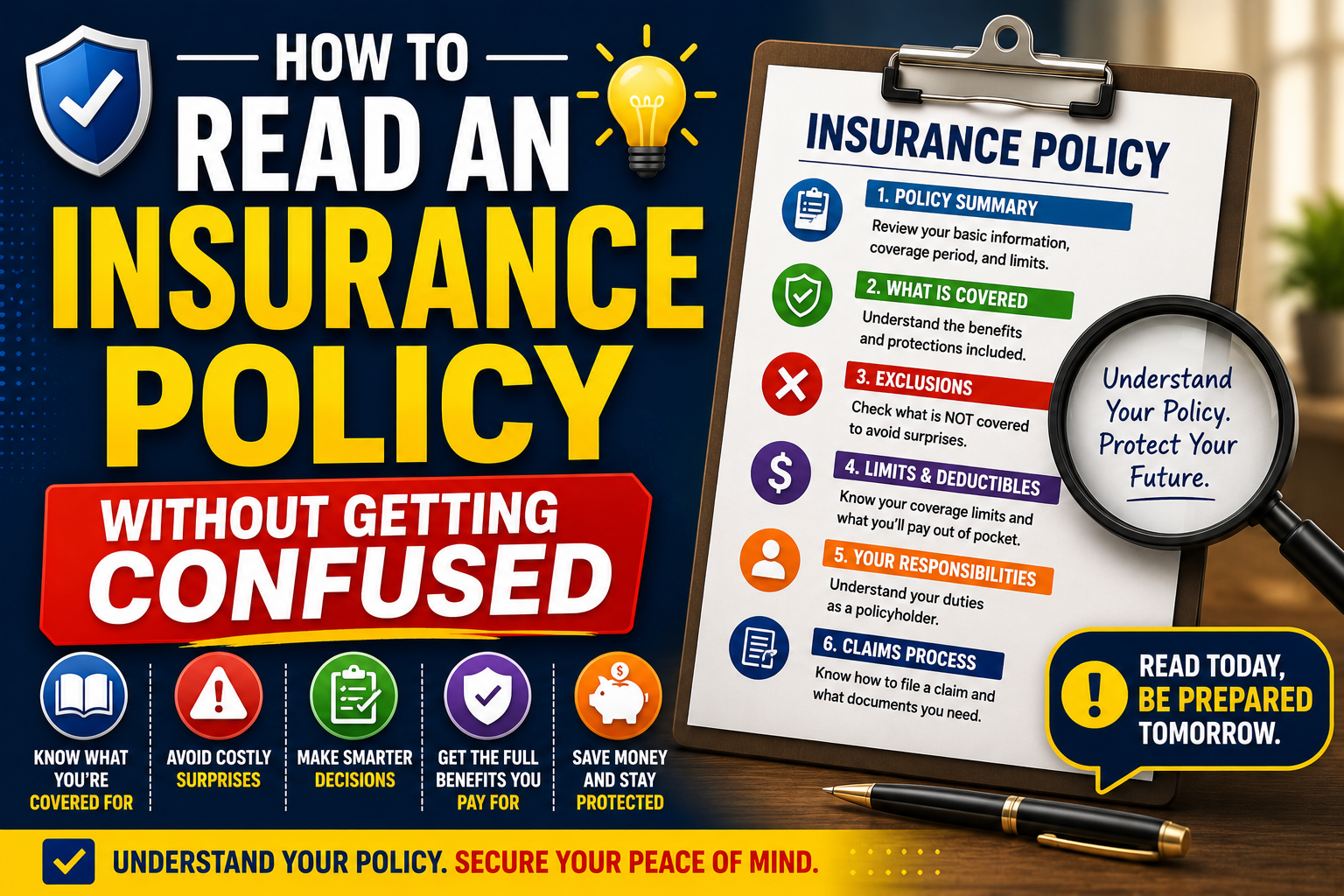
For many people, reading an insurance policy feels like trying to understand a foreign language. Long paragraphs, legal terminology, technical definitions, exclusions, and fine print can make even the simplest policy seem intimidating.
As a result, many policyholders skip reading their insurance documents altogether. They assume their agent explained everything or believe they’ll only need to look at the policy if something goes wrong.
Unfortunately, that’s one of the biggest mistakes you can make.
When an accident, illness, theft, or natural disaster occurs, your insurance policy becomes one of the most important documents you own. If you don’t understand what’s inside it, you may be surprised to discover that certain situations aren’t covered—or that you’ve misunderstood key conditions.
The good news is that insurance policies are much easier to understand once you know what to look for.
In this guide, we’ll explain how to read an insurance policy step by step, define common insurance terms, highlight the sections you should pay the most attention to, and help you avoid misunderstandings that could cost you money.
Why You Should Read Your Insurance Policy
Many people buy insurance and file the paperwork away without ever opening it again.
That’s risky.
Reading your policy helps you:
- Understand exactly what is covered.
- Learn what isn’t covered.
- Know your responsibilities.
- Avoid claim denials.
- Compare policies more effectively.
- Make informed decisions when renewing coverage.
Your insurance policy is a legal contract. Knowing what’s in it helps you get the full benefit of the protection you’ve paid for.
Step 1: Start With the Policy Summary
Most insurance policies begin with a summary page, often called the Declarations Page or Policy Schedule.
This section provides an overview of your policy.
It usually includes:
- Policy number
- Policyholder’s name
- Coverage period
- Covered property or individual
- Coverage limits
- Premium amount
- Deductible
- Endorsements or riders
Before reading the rest of the document, verify that all the information is accurate.
Even small errors—such as an incorrect address or vehicle identification number—can create problems later.
Step 2: Read the Definitions Section
Insurance policies define specific words that may have a different meaning than they do in everyday conversation.
Examples include:
- Insured
- Beneficiary
- Covered loss
- Occurrence
- Deductible
- Premium
- Actual cash value
- Replacement cost
These definitions apply throughout the policy.
If you misunderstand one key definition, it can change the meaning of several other sections.
Never skip the definitions page.
Step 3: Understand What the Policy Covers
The coverage section explains the situations in which the insurance company agrees to pay.
For example:
A home insurance policy might cover:
- Fire
- Theft
- Windstorms
- Lightning
- Vandalism
A health insurance policy may cover:
- Hospitalization
- Surgery
- Doctor visits
- Prescription medication
An auto insurance policy could include:
- Liability
- Collision
- Comprehensive coverage
- Uninsured motorist protection
As you read, ask yourself:
Would this policy protect me in the situations I’m most concerned about?
Step 4: Pay Close Attention to Exclusions
One of the most overlooked sections of any insurance policy is the list of exclusions.
Exclusions explain when the insurer will not pay a claim.
Common exclusions include:
- Flood damage
- Earthquakes
- Wear and tear
- Intentional damage
- Cosmetic repairs
- Illegal activities
- Certain high-risk sports
- Pre-existing medical conditions (depending on the policy)
Understanding exclusions helps prevent unpleasant surprises after filing a claim.
Many disputes occur because policyholders assumed something was covered when it wasn’t.
Step 5: Learn Your Coverage Limits
Every insurance policy has financial limits.
These determine the maximum amount the insurer will pay.
Examples include:
- $500,000 home coverage
- $50,000 personal property coverage
- $100,000 liability coverage
- $1 million life insurance benefit
If your losses exceed these limits, you’ll usually be responsible for the remaining costs.
Make sure your limits are appropriate for your financial situation.
Step 6: Understand Your Deductible
A deductible is the amount you must pay before your insurance begins contributing toward a covered claim.
Example:
Damage totals $10,000
Your deductible is $1,000
Insurance pays $9,000
You pay $1,000
Policies with higher deductibles generally have lower premiums.
Choose a deductible you can comfortably afford during an emergency.
Step 7: Review the Claim Process
Knowing how to file a claim before an emergency occurs can save valuable time.
Look for information about:
- How to report a claim
- Required documentation
- Time limits
- Contact information
- Online claim options
- Emergency procedures
Some insurers require claims to be reported within a specific timeframe.
Missing deadlines may result in claim denial.
Step 8: Check the Conditions
Insurance policies include conditions that both you and the insurer must follow.
Examples include:
- Paying premiums on time
- Reporting losses promptly
- Cooperating during investigations
- Preventing further damage after an incident
- Providing requested documentation
Failure to meet these conditions could affect your claim.
Step 9: Review Any Riders or Endorsements
Many insurance policies include optional additions called riders or endorsements.
These modify your standard coverage.
Examples include:
- Flood insurance
- Jewelry coverage
- Identity theft protection
- Critical illness coverage
- Roadside assistance
- Rental car reimbursement
Review these carefully to understand exactly what additional protection you’ve purchased.
Step 10: Ask Questions About Anything You Don’t Understand
Never feel embarrassed about asking questions.
Insurance professionals expect policyholders to seek clarification.
Ask questions like:
- Can you explain this section in simple terms?
- Does this cover my specific situation?
- Are there any important exclusions?
- What happens if I move or change jobs?
- Can I increase my coverage later?
A five-minute conversation today can prevent expensive misunderstandings later.
Common Insurance Terms Explained
Here are some common terms you’ll encounter:
Premium
The amount you pay for insurance coverage.
Deductible
The amount you pay before insurance contributes to a covered claim.
Coverage Limit
The maximum amount your insurer will pay.
Beneficiary
The person or organization receiving benefits under a life insurance policy.
Exclusion
A situation or event that the policy does not cover.
Claim
A request for payment after a covered event.
Rider (Endorsement)
An optional addition that modifies your policy.
Policyholder
The individual or organization that owns the insurance policy.
Common Mistakes People Make
Avoid these mistakes when reading your insurance policy:
- Reading only the premium amount.
- Ignoring exclusions.
- Skipping the definitions section.
- Forgetting to review coverage limits.
- Assuming all policies are the same.
- Never updating the policy after life changes.
- Failing to ask questions.
Understanding your policy today can prevent disappointment tomorrow.
Tips for Understanding Insurance Faster
Here are practical ways to simplify the process:
- Read the policy in small sections.
- Highlight important terms.
- Make notes as you go.
- Ask your insurance advisor for clarification.
- Compare your policy with others.
- Keep a copy in both digital and printed form.
- Review it annually.
The more familiar you become with your policy, the easier it will be to use when needed.
Frequently Asked Questions (FAQs)
Do I really need to read my insurance policy?
Yes. Your policy explains what is covered, what isn’t, your responsibilities, and how to file a claim. Reading it helps prevent misunderstandings.
What is the most important section of an insurance policy?
The coverage section, exclusions, coverage limits, deductibles, and claim procedures are among the most important sections to understand.
What should I do if I don’t understand my policy?
Contact your insurance provider or advisor and ask them to explain the confusing sections in plain language.
Can my insurance policy change over time?
Yes. Policies may be updated during renewals, through endorsements, or after changes in your personal circumstances.
How often should I review my insurance policy?
At least once a year and whenever you experience major life events such as marriage, purchasing a home, changing jobs, or starting a business.
Final Thoughts
Reading an insurance policy doesn’t have to be overwhelming. While the language may seem technical at first, understanding a few key sections—such as coverage, exclusions, deductibles, limits, and claims procedures—can dramatically improve your confidence and help you make informed decisions.
Remember, insurance is there to protect you, but that protection is only effective if you understand how your policy works. Taking an hour to review your policy today could save you thousands of dollars and countless headaches in the future.
Whenever you’re unsure about a term or condition, ask questions. A reputable insurance professional will be happy to explain the details. The more informed you are, the better prepared you’ll be when life takes an unexpected turn.
Ultimately, the best insurance policy isn’t just the one you buy—it’s the one you fully understand.

For many people, pets are much more than animals—they’re beloved members of the family. Whether you own a playful puppy, a curious cat, or another cherished companion, you want them to live long, healthy, and happy lives. But as any pet owner knows, veterinary care can be expensive, especially when emergencies or chronic illnesses arise.
A routine check-up may be affordable, but a serious injury, emergency surgery, or long-term medical treatment can quickly cost hundreds or even thousands of dollars. That’s why more pet owners are considering pet insurance as a way to manage unexpected veterinary expenses.
Still, one question remains:
Is pet insurance really worth the cost?
The answer depends on several factors, including your pet’s age, breed, health, lifestyle, and your financial situation. In this guide, we’ll explore what pet insurance is, what it covers, what it doesn’t cover, its advantages and disadvantages, typical costs, and how to decide whether it’s the right investment for you.
What Is Pet Insurance?
Pet insurance is a policy that helps reimburse eligible veterinary expenses if your pet becomes ill, is injured, or requires covered medical treatment.
Like health insurance for humans, pet insurance helps reduce the financial burden of unexpected healthcare costs. Depending on your policy, you may pay the veterinary bill upfront and then submit a claim for reimbursement, while some providers may offer direct payment arrangements with participating clinics.
Coverage varies by insurer and plan, so understanding your policy is essential before purchasing.
Why More Pet Owners Are Buying Pet Insurance
Veterinary medicine has advanced significantly in recent years. Pets now have access to treatments that were once only available for humans, including:
- MRI and CT scans
- Cancer treatments
- Orthopedic surgeries
- Physical rehabilitation
- Advanced diagnostic testing
- Specialized surgeries
- Long-term medications
While these treatments can save or improve a pet’s life, they often come with substantial costs.
Pet insurance helps owners make healthcare decisions based on what’s best for the pet rather than what they can immediately afford.
What Does Pet Insurance Usually Cover?
Coverage depends on the provider and policy, but comprehensive plans commonly include the following.
1. Accidents
Most pet insurance policies cover accidental injuries, including:
- Broken bones
- Bite wounds
- Vehicle accidents
- Poisoning
- Cuts and lacerations
- Foreign object ingestion
Accident coverage is often the most basic level of pet insurance.
2. Illnesses
Comprehensive policies generally cover treatment for illnesses such as:
- Ear infections
- Respiratory infections
- Digestive disorders
- Diabetes
- Arthritis
- Heart disease
- Kidney disease
- Cancer
Coverage usually applies after any waiting period has ended.
3. Diagnostic Tests
Many policies help pay for diagnostic procedures including:
- Blood tests
- X-rays
- Ultrasounds
- MRI scans
- CT scans
- Laboratory testing
Early diagnosis often leads to better treatment outcomes.
4. Surgery
Pet insurance frequently covers medically necessary surgeries, including:
- Emergency procedures
- Orthopedic surgery
- Tumor removal
- Internal surgery
- Soft tissue procedures
Depending on the policy, anesthesia and hospitalization may also be included.
5. Prescription Medications
If your pet requires medication following an illness or surgery, many policies reimburse eligible prescription drug costs.
6. Hospitalization
Coverage may include:
- Overnight stays
- Intensive care
- Nursing care
- Monitoring
- Emergency hospitalization
Hospital bills can become expensive quickly, making this benefit particularly valuable.
7. Hereditary and Congenital Conditions
Some comprehensive plans cover inherited conditions, provided they weren’t diagnosed before the policy became active.
Examples include:
- Hip dysplasia
- Certain heart conditions
- Eye disorders
- Breed-specific illnesses
Always verify whether hereditary conditions are included.
Optional Coverage You Can Add
Many insurers offer additional benefits for an extra premium.
These may include:
Preventive Care
- Vaccinations
- Wellness exams
- Flea prevention
- Tick prevention
- Routine bloodwork
Dental Care
Some policies offer coverage for:
- Dental cleanings
- Tooth extractions
- Dental disease treatment
Behavioral Therapy
Certain plans help cover treatment for anxiety or behavioral disorders.
Alternative Therapies
Depending on the provider, coverage may include:
- Acupuncture
- Hydrotherapy
- Chiropractic care
- Physical rehabilitation
What Pet Insurance Usually Doesn’t Cover
Like all insurance products, pet insurance has exclusions.
Common exclusions include:
- Pre-existing medical conditions
- Cosmetic procedures
- Breeding expenses
- Pregnancy and childbirth
- Routine grooming
- Food and nutritional supplements
- Experimental treatments
- Elective procedures
Understanding these exclusions is essential before purchasing a policy.
How Much Does Pet Insurance Cost?
Pet insurance premiums vary depending on several factors.
These include:
- Species (dog, cat, etc.)
- Breed
- Age
- Location
- Coverage level
- Deductible
- Annual reimbursement limit
- Reimbursement percentage
Generally:
- Younger pets cost less to insure.
- Older pets usually have higher premiums.
- Larger dog breeds often cost more than smaller breeds.
- Comprehensive coverage costs more than accident-only policies.
Although premiums vary, many owners find them manageable compared to the potential cost of emergency veterinary care.
Pros of Pet Insurance
Pet insurance offers several important advantages.
Financial Protection
Unexpected veterinary bills can be overwhelming. Insurance helps reduce out-of-pocket costs for covered treatments.
Better Treatment Decisions
With insurance, owners may be able to choose recommended treatments without delaying care due to financial concerns.
Peace of Mind
Knowing you have financial support during emergencies provides reassurance.
Access to Advanced Care
Insurance can make specialized surgeries and advanced diagnostics more affordable.
Flexible Veterinarian Choice
Many pet insurance providers allow you to visit any licensed veterinarian.
Cons of Pet Insurance
While beneficial, pet insurance isn’t perfect.
Potential drawbacks include:
Monthly Premiums
You’ll pay ongoing premiums even if your pet remains healthy.
Waiting Periods
Coverage often doesn’t begin immediately after enrollment.
Deductibles
Most policies require you to pay part of the costs before reimbursement.
Exclusions
Pre-existing conditions are typically not covered.
Reimbursement Delays
Depending on the insurer, reimbursement may take days or weeks after submitting your claim.
Is Pet Insurance Worth It?
For many pet owners, the answer is yes.
Pet insurance is particularly worthwhile if:
- Your pet is young and healthy.
- Your breed is prone to hereditary conditions.
- You want protection against expensive emergencies.
- You don’t have a large emergency savings fund.
- You prefer predictable monthly expenses over unexpected large veterinary bills.
However, if you have substantial savings set aside specifically for veterinary emergencies, you may decide to self-insure instead.
Ultimately, the right choice depends on your financial situation and your comfort level with risk.
How to Choose the Right Pet Insurance
Before purchasing a policy, compare the following:
- Monthly premium
- Deductible
- Reimbursement percentage
- Annual coverage limits
- Waiting periods
- Exclusions
- Customer reviews
- Claims process
- Network restrictions (if any)
- Optional wellness coverage
Don’t focus only on the lowest premium—consider the overall value of the policy.
Tips to Save Money on Pet Insurance
You can often reduce costs by:
- Enrolling your pet while they’re young.
- Choosing a higher deductible if you have emergency savings.
- Comparing quotes from multiple insurers.
- Selecting only the coverage you need.
- Maintaining your pet’s health through preventive care.
- Asking about multi-pet discounts.
Preventive healthcare can also reduce the likelihood of expensive future treatments.
Frequently Asked Questions (FAQs)
Is pet insurance worth it for healthy pets?
Yes. Purchasing insurance while your pet is healthy often results in lower premiums and ensures future illnesses aren’t considered pre-existing conditions.
Does pet insurance cover vaccinations?
Routine vaccinations are usually covered only if you’ve purchased an optional wellness or preventive care package.
Can I use any veterinarian?
Many pet insurance providers allow treatment at any licensed veterinarian, but it’s important to confirm this before purchasing a policy.
Does pet insurance cover pre-existing conditions?
Generally, no. Most insurers exclude conditions diagnosed before the policy begins.
When is the best time to buy pet insurance?
The best time is when your pet is young and healthy, before medical issues develop.
Final Thoughts
Pet insurance isn’t just about protecting your wallet—it’s about protecting your ability to provide the best possible care for your pet when they need it most. Unexpected illnesses and accidents can happen at any stage of a pet’s life, and veterinary costs continue to rise as medical technology advances.
For many pet owners, the relatively modest monthly premium is a worthwhile investment in exchange for financial security and peace of mind. While no insurance policy covers every situation, the right plan can significantly reduce the burden of expensive treatments and help you make decisions based on your pet’s health rather than financial limitations.
Before choosing a policy, take time to compare providers, understand the coverage and exclusions, review reimbursement terms, and select a plan that fits both your pet’s needs and your budget. After all, our pets give us unconditional love and companionship—the right insurance can help ensure they’re cared for when they need us most.

Planning a trip is exciting. Whether you’re traveling for a relaxing vacation, a business conference, a family reunion, or an international adventure, you’ve probably spent time booking flights, reserving accommodations, and organizing your itinerary.
But there’s one important question many travelers overlook:
Should you buy travel insurance?
Some travelers never leave home without it, while others see it as an unnecessary expense. The truth is that travel insurance isn’t always essential—but in many situations, it can save you thousands of dollars and prevent a stressful trip from becoming a financial disaster.
Unexpected events can happen to anyone. Flights get canceled, luggage gets lost, illnesses occur abroad, and emergencies force travelers to cut their trips short. Travel insurance is designed to reduce the financial impact of these unforeseen situations.
In this comprehensive guide, we’ll explain what travel insurance is, what it covers, when it’s worth buying, when you may not need it, and how to choose the best policy for your travel plans.
What Is Travel Insurance?
Travel insurance is a policy that provides financial protection against certain unexpected events that may occur before or during your trip.
Depending on the policy you purchase, travel insurance may reimburse you for expenses related to:
- Trip cancellations
- Medical emergencies
- Emergency evacuation
- Lost luggage
- Delayed baggage
- Flight delays
- Missed connections
- Passport loss
- Personal liability
- Accidental death or disability
Coverage varies by insurer and policy type, so it’s important to understand exactly what your plan includes.
Why Travel Insurance Matters
Travel is unpredictable.
Even the best-planned trips can be disrupted by circumstances beyond your control.
Imagine these situations:
- You become seriously ill two days before departure.
- Your airline cancels your international flight.
- Your luggage disappears during a connecting flight.
- You need emergency surgery while traveling overseas.
- Political unrest forces you to leave your destination early.
- Severe weather delays your return home.
Without travel insurance, you may have to cover these unexpected expenses yourself.
A comprehensive travel insurance policy can provide both financial protection and peace of mind.
What Travel Insurance Typically Covers
Although coverage differs between providers, most comprehensive travel insurance policies include several core benefits.
1. Trip Cancellation Coverage
This reimburses prepaid, non-refundable travel expenses if you must cancel your trip for a covered reason.
Common covered reasons include:
- Serious illness
- Injury
- Death of a family member
- Natural disasters
- Jury duty
- Certain work-related emergencies
Covered expenses may include:
- Airline tickets
- Hotel reservations
- Tour packages
- Cruise bookings
- Event tickets
2. Trip Interruption Coverage
If your trip is unexpectedly cut short, this coverage may reimburse:
- Unused hotel nights
- Unused excursions
- Additional transportation costs
- Return travel expenses
Trip interruption coverage is especially valuable for expensive international vacations.
3. Emergency Medical Coverage
Medical treatment abroad can be extremely expensive, particularly in countries where healthcare costs are high.
Travel medical insurance may help cover:
- Hospitalization
- Emergency treatment
- Physician visits
- Prescription medications
- Ambulance services
- Emergency dental care
Some countries even require proof of travel medical insurance before issuing visas.
4. Emergency Medical Evacuation
If local medical facilities cannot adequately treat your condition, evacuation coverage may pay for transportation to an appropriate hospital.
This could involve:
- Air ambulance services
- Medical flights
- Specialized transportation
Medical evacuations can cost tens of thousands of dollars without insurance.
5. Lost, Stolen, or Delayed Baggage
Travel insurance may reimburse you if your luggage is:
- Lost
- Stolen
- Damaged
- Delayed
Coverage may include reimbursement for essential purchases such as:
- Clothing
- Toiletries
- Medication
- Personal necessities
6. Flight Delays and Missed Connections
If your flight is significantly delayed, your policy may reimburse expenses such as:
- Hotel accommodations
- Meals
- Transportation
- Rebooking fees
Missed connection benefits can also help cover costs when delays cause you to miss connecting flights.
7. Personal Liability Coverage
Some policies provide liability protection if you accidentally injure another person or damage someone else’s property while traveling.
Coverage varies significantly between insurers.
When You Should Buy Travel Insurance
Travel insurance isn’t necessary for every trip, but there are situations where it provides substantial value.
International Travel
Healthcare costs abroad can be unpredictable.
Many domestic health insurance plans offer little or no international coverage.
Travel insurance helps protect you from expensive medical bills overseas.
Expensive Vacations
If you’ve spent thousands of dollars on flights, hotels, cruises, or tours, travel insurance protects your financial investment.
Cruises
Cruise vacations often involve:
- Large upfront payments
- Strict cancellation policies
- International destinations
Travel insurance is frequently recommended for cruise travelers.
Adventure Activities
Planning activities such as:
- Skiing
- Scuba diving
- Mountain climbing
- Hiking
- Zip-lining
Check whether your policy covers adventure sports.
Some require optional coverage.
Traveling During Hurricane or Storm Seasons
Weather-related disruptions can significantly impact travel plans.
Insurance may help reimburse expenses caused by covered weather events.
Traveling With Children or Elderly Family Members
Medical emergencies and unexpected cancellations become more likely when traveling with young children or older adults.
Travel insurance provides additional peace of mind.
When You May Not Need Travel Insurance
Although travel insurance is valuable in many situations, it isn’t always necessary.
You might not need it if:
You’re Taking a Short Local Trip
If you’re traveling close to home for a weekend, your financial risk may be relatively low.
Your Trip Is Fully Refundable
If flights and accommodations can be canceled without penalties, insurance may provide limited additional value.
You Already Have Coverage Elsewhere
Some benefits may already be included through:
- Premium credit cards
- Employer travel policies
- Existing health insurance
- Membership organizations
Review your existing benefits before purchasing additional coverage.
You’re Comfortable Covering Potential Losses Yourself
Some travelers have sufficient savings to absorb unexpected travel expenses without financial hardship.
What Travel Insurance Usually Doesn’t Cover
Many travelers assume every problem is covered.
However, common exclusions often include:
- Pre-existing medical conditions (unless specifically covered)
- Traveling against government advisories
- Alcohol or drug-related incidents
- Illegal activities
- Routine medical care
- Cosmetic procedures
- High-risk sports without additional coverage
- Undeclared valuable belongings
Always read the policy wording carefully.
How Much Does Travel Insurance Cost?
Travel insurance typically costs between 4% and 10% of your total trip cost.
Several factors influence pricing, including:
- Traveler’s age
- Destination
- Trip duration
- Trip cost
- Coverage amount
- Optional benefits
- Medical history (where applicable)
Although it’s an additional expense, travel insurance is often inexpensive compared to the potential financial consequences of a serious travel emergency.
Tips for Choosing the Right Travel Insurance
When comparing policies, consider:
- Medical coverage limits
- Emergency evacuation benefits
- Cancellation coverage
- Baggage protection
- Claim process
- Customer reviews
- Insurer reputation
- Adventure activity coverage
- COVID-19 or infectious disease coverage (if applicable)
Choose a policy based on your travel plans—not simply the lowest premium.
Common Mistakes Travelers Make
Avoid these common errors:
- Buying insurance after problems have already occurred.
- Assuming all travel insurance policies are identical.
- Ignoring exclusions.
- Failing to disclose medical conditions.
- Underestimating medical costs abroad.
- Forgetting to check existing insurance benefits.
- Choosing the cheapest policy without comparing coverage.
Proper preparation reduces both financial and travel-related stress.
Frequently Asked Questions (FAQs)
Is travel insurance mandatory?
It depends on your destination. Some countries require proof of travel medical insurance before granting entry or issuing visas.
Does travel insurance cover medical emergencies?
Most comprehensive travel insurance policies include emergency medical coverage, but coverage limits and exclusions vary.
Is travel insurance worth it for domestic travel?
It depends on the cost of your trip, refund policies, and existing insurance coverage. For inexpensive local trips, it may not always be necessary.
Does travel insurance cover lost luggage?
Yes, many policies provide compensation for lost, stolen, or delayed baggage, subject to policy limits.
When should I buy travel insurance?
Ideally, purchase travel insurance soon after booking your trip to maximize eligibility for cancellation-related benefits.
Final Thoughts
Travel insurance isn’t about expecting something to go wrong—it’s about being prepared if it does. While not every trip requires insurance, many travelers find that the relatively small cost provides valuable financial protection and peace of mind.
If you’re traveling internationally, spending a significant amount on your vacation, participating in adventure activities, or visiting destinations where medical care is expensive, travel insurance is often a worthwhile investment.
Before purchasing a policy, take time to compare providers, understand what’s covered, review exclusions, and ensure the policy matches your travel plans. The best travel insurance isn’t necessarily the cheapest—it’s the one that offers the right protection for your specific journey.
With the right coverage in place, you can focus less on “what if?” and more on enjoying your trip with confidence.
-

 Celebrities & Public Personalities8 months ago
AM Yerima Nigerian Navy Biography: Age, Father, State of Origin
-
 Celebrities & Public Personalities9 months ago
Maria Lourdes Ortaleza Biography: Age, Tribe, Height, Family
-
 Historical Figures8 months ago
Oburu Odinga Biography: Wives, Daughters, Net Worth, Family
-
 Celebrities & Public Personalities8 months ago
Shawn Faqua Biography: Wife, State of Origin, Age, Real Name
-
 Celebrities & Public Personalities9 months ago
David Skosana Biography: Wife, Date of Birth, Net Worth 2025
-
Celebrities & Public Personalities9 months ago
Diana Turova Biography: , Height, Tribe, Age, Net Worth, Career
-
 Celebrities & Public Personalities9 months ago
Soviet Lekganyane Biography: Wife, Age, Father, Parents 2025
-
 Celebrities & Public Personalities9 months ago
Ashley Sauls Biography: Wife, Home Language, Age, Family